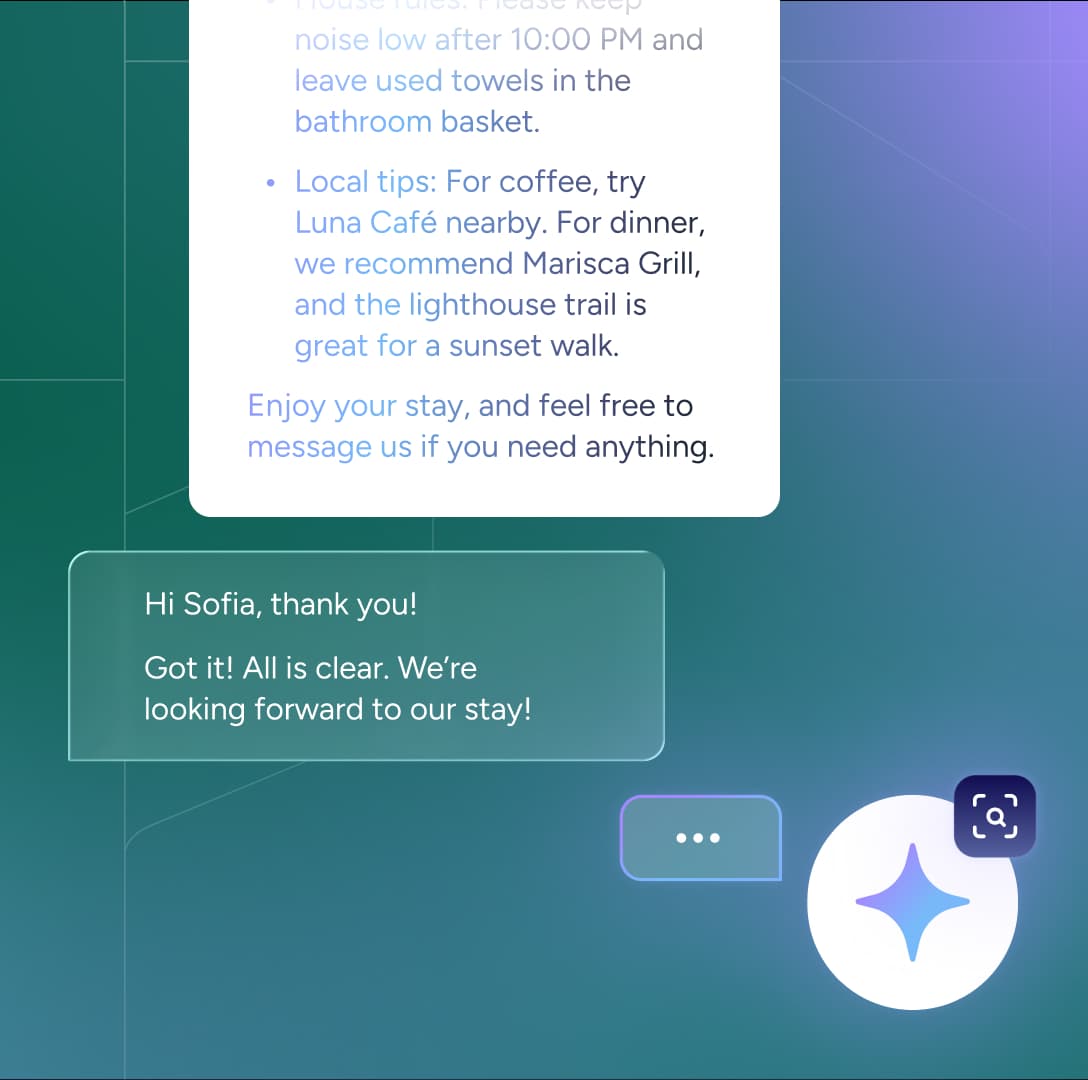
Property management automation has always been a trade-off. You set a rule — send this message at check-in, adjust rates on weekends, alert me when a guest mentions “broken” — and the system follows it. Predictable, reliable, and completely blind to context. The guest who messages “broken” because the Wi-Fi password isn’t working gets the same escalation as the one reporting a burst pipe.
Then generative AI arrived and the pitch changed. Now your PMS could draft a reply, suggest a rate, write a listing description. Smarter output, but the workflow stayed the same: you still reviewed, approved, and clicked send. The AI got better. Your day didn’t.
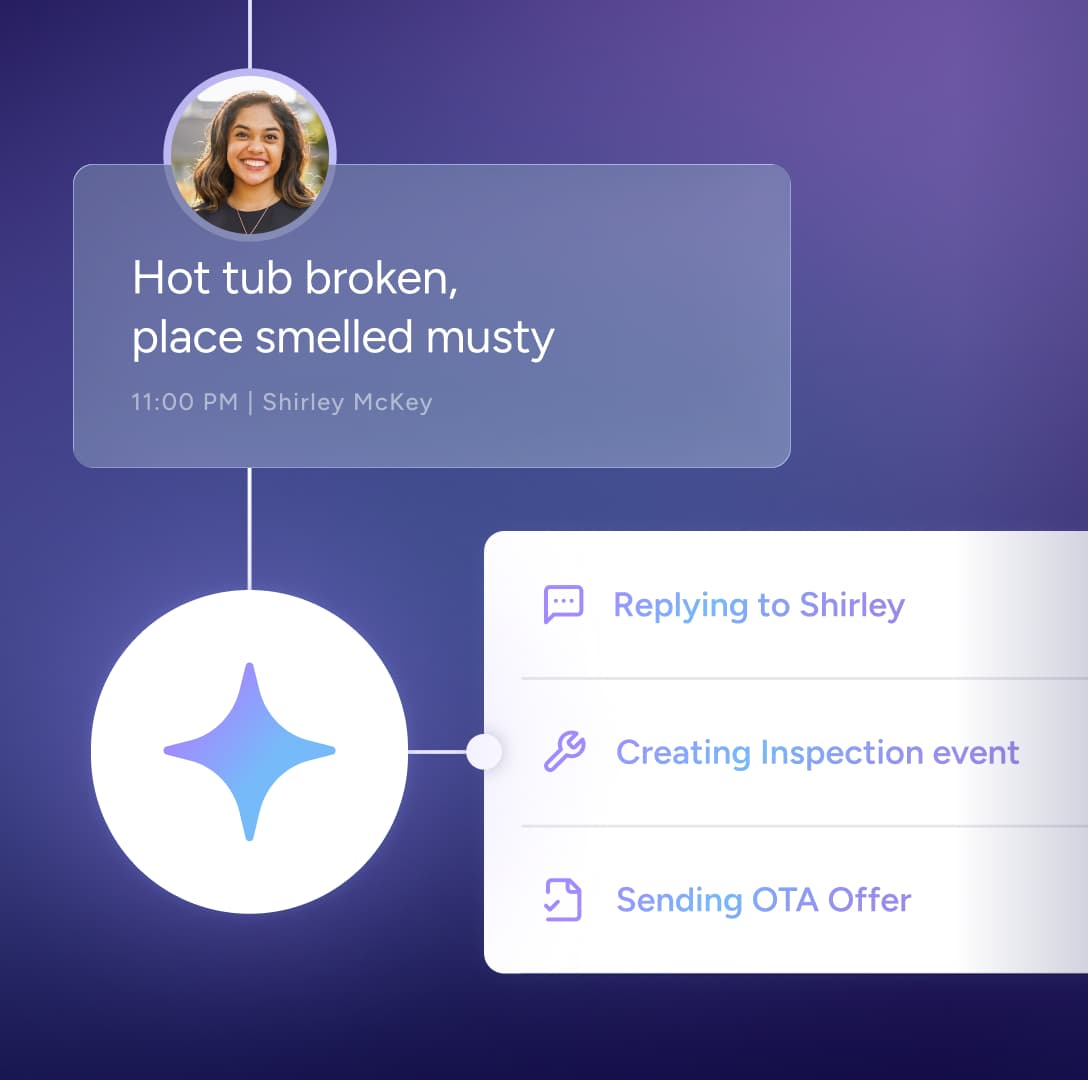
Agentic AI breaks that pattern. Instead of drafting a response and waiting, it reads the reservation data, checks your policies, evaluates the guest’s sentiment, and sends an accurate reply — or creates a task, adjusts a price, flags a fraud risk. It doesn’t suggest the next step. It takes it.
TL;DR: Most AI in property management still suggests actions for you to approve. Agentic AI reads the situation, decides the right response, and actually executes it — handling guest messages, adjusting pricing, creating maintenance tasks, and reconciling payments without waiting for you to push a button. The difference isn’t smarter suggestions. It’s a system that operates your business within rules you define, drawing from domain-specific data built on years of real STR operations.
How did property management get from automation to agentic AI?
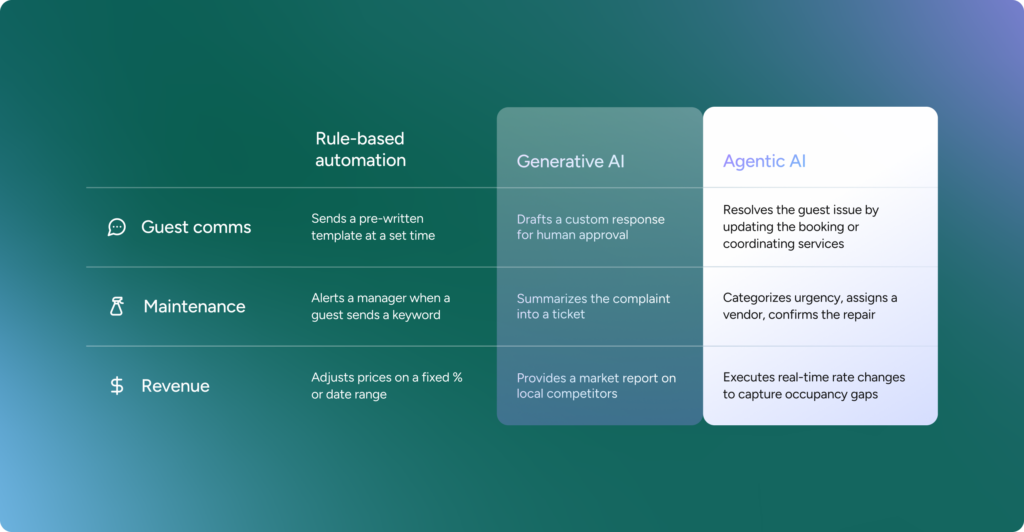
The evolution is clearer when you see it in layers. Most operators are somewhere on this spectrum, and knowing where you sit determines what’s possible next.
| Rule-based automation | Generative AI | Agentic AI | |
| Guest communication | Sends a pre-written template at a scheduled time | Drafts a custom response for you to review and send | Reads the reservation context, replies accurately, and escalates only what needs a human |
| Maintenance | Alerts you when a guest message contains a keyword | Summarizes the complaint into a readable ticket | Detects the issue, creates a task with the right property and urgency, and assigns it |
| Revenue management | Adjusts rates on a fixed schedule or percentage | Generates a market report for you to interpret | Evaluates real-time demand and executes rate changes across channels |
| Financial operations | Logs transactions for manual reconciliation | Categorizes expenses into draft reports | Matches payments to reservations, calculates commissions, and updates owner statements |
Each layer builds on the last. But the jump from generative to agentic isn’t incremental — it’s architectural. Generative AI makes your team faster. Agentic AI makes your operation run.
Why do generic AI tools fall short in property management?
A guest messages: “Can I check in two hours early tomorrow?”
A generic AI tool — trained on broad hospitality content — can draft a polite response. But it doesn’t know the check-in time for that specific property on that specific date. It doesn’t know whether another guest is checking out late. It doesn’t know your early check-in policy or whether you charge for it.
So it hedges. “Let me check and get back to you.” And now you’re back in the loop.
Agentic AI built for property management operates differently because it’s trained differently. It pulls live data from your listings, reservations, and policies. It draws from patterns across hundreds of thousands of active listings and over a decade of real STR operational data. It doesn’t approximate your cancellation policy — it reads the one attached to the reservation. It doesn’t guess at availability — it checks the calendar.
The AI itself isn’t the moat. The data it’s trained on is.
What does agentic AI actually look like inside a PMS?
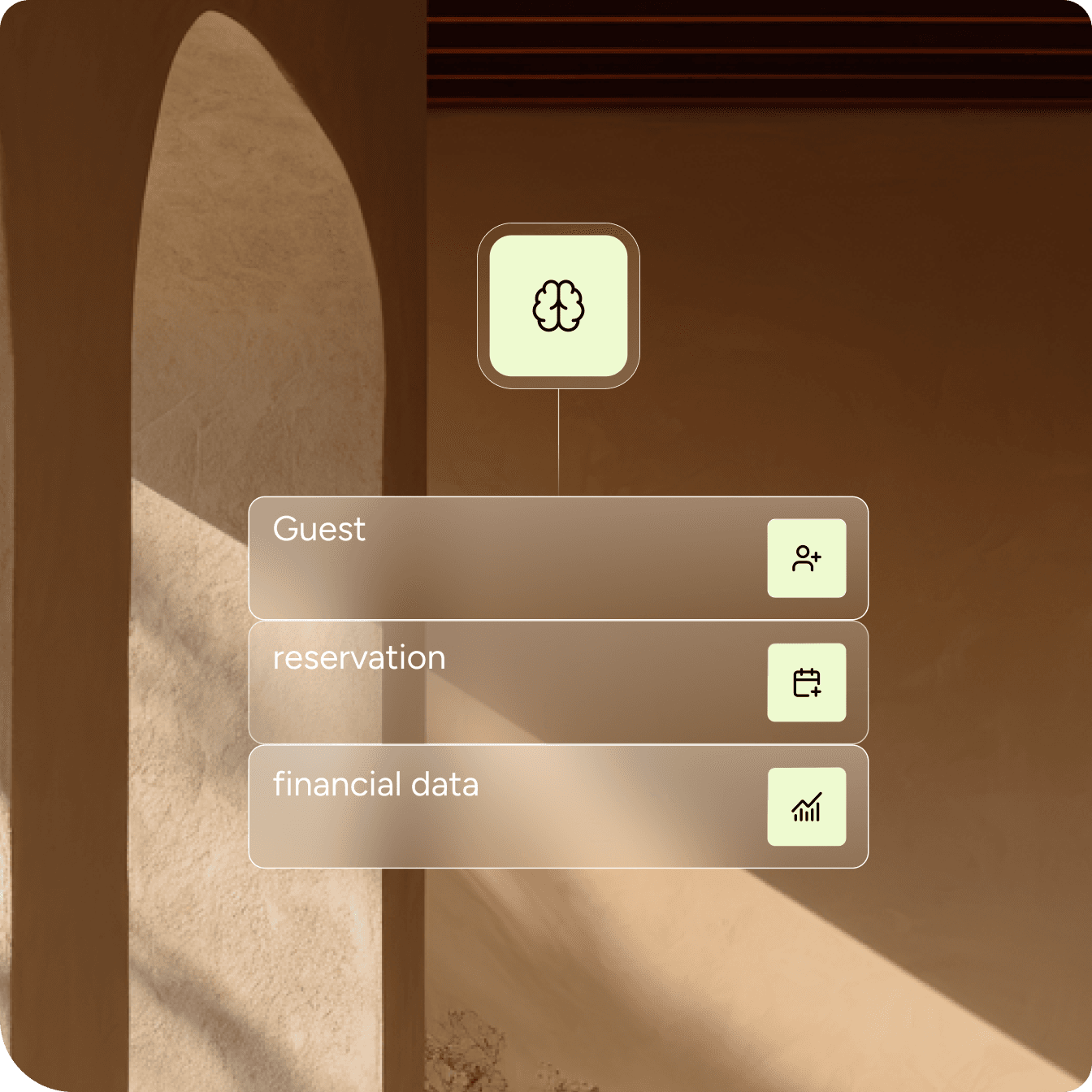
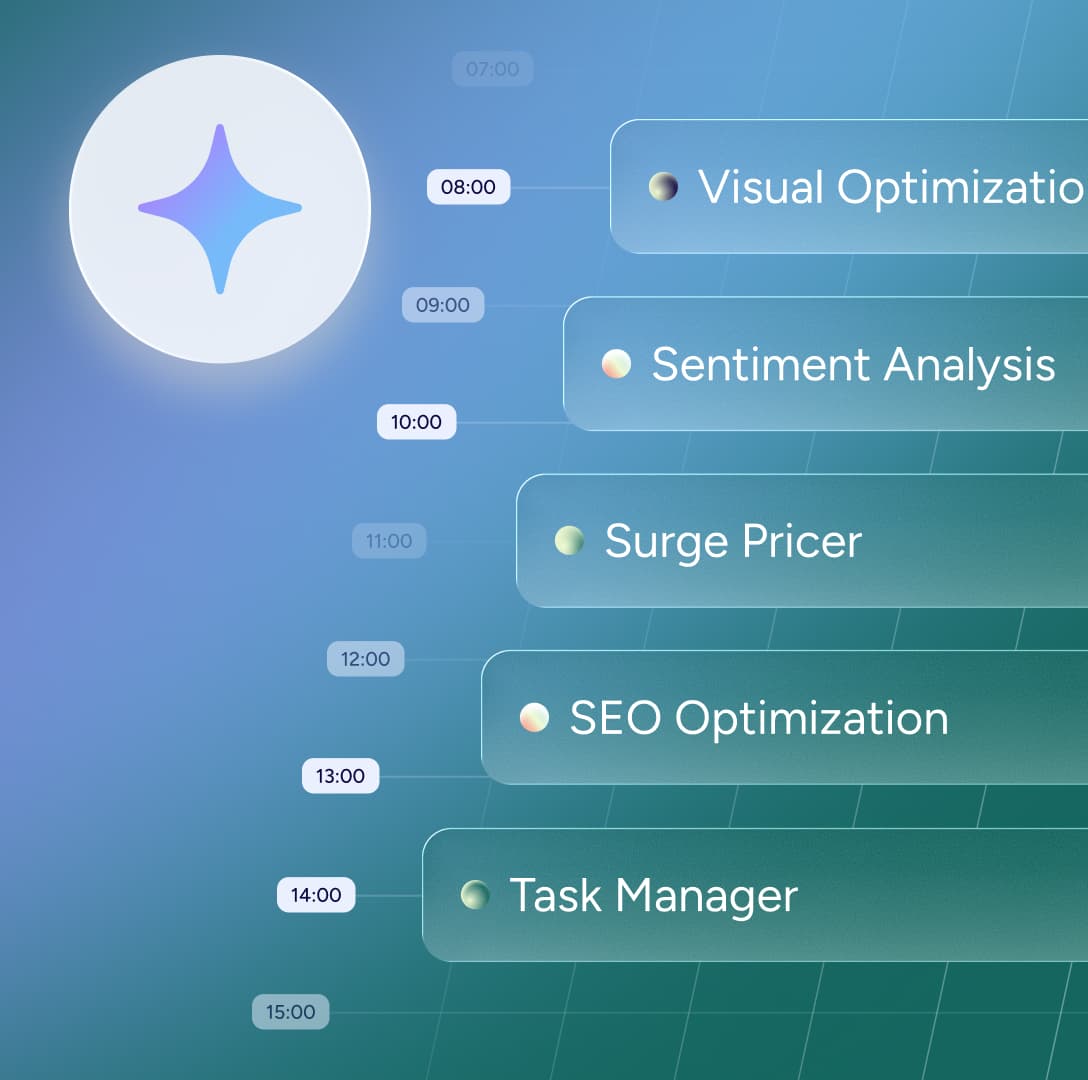
Not a single feature. A system of agents, each responsible for a business outcome, each sharing context with every other agent in the platform.
Boost your short term rentals today
Communication: The agent reads every incoming message, determines the right response based on your listing data and policies, sends replies it’s confident about, and escalates what it isn’t. It adjusts tone based on guest sentiment — a billing complaint gets a different register than a question about pool hours. It works across languages without losing context or accuracy.
Revenue: The agent monitors market demand, competitor pricing, and local events. When it identifies an opportunity — a gap in your rates relative to demand — it adjusts pricing across every channel. It also detects upsell moments in guest conversations and surfaces paid upgrades like early check-in or mid-stay cleaning through your Guest App.
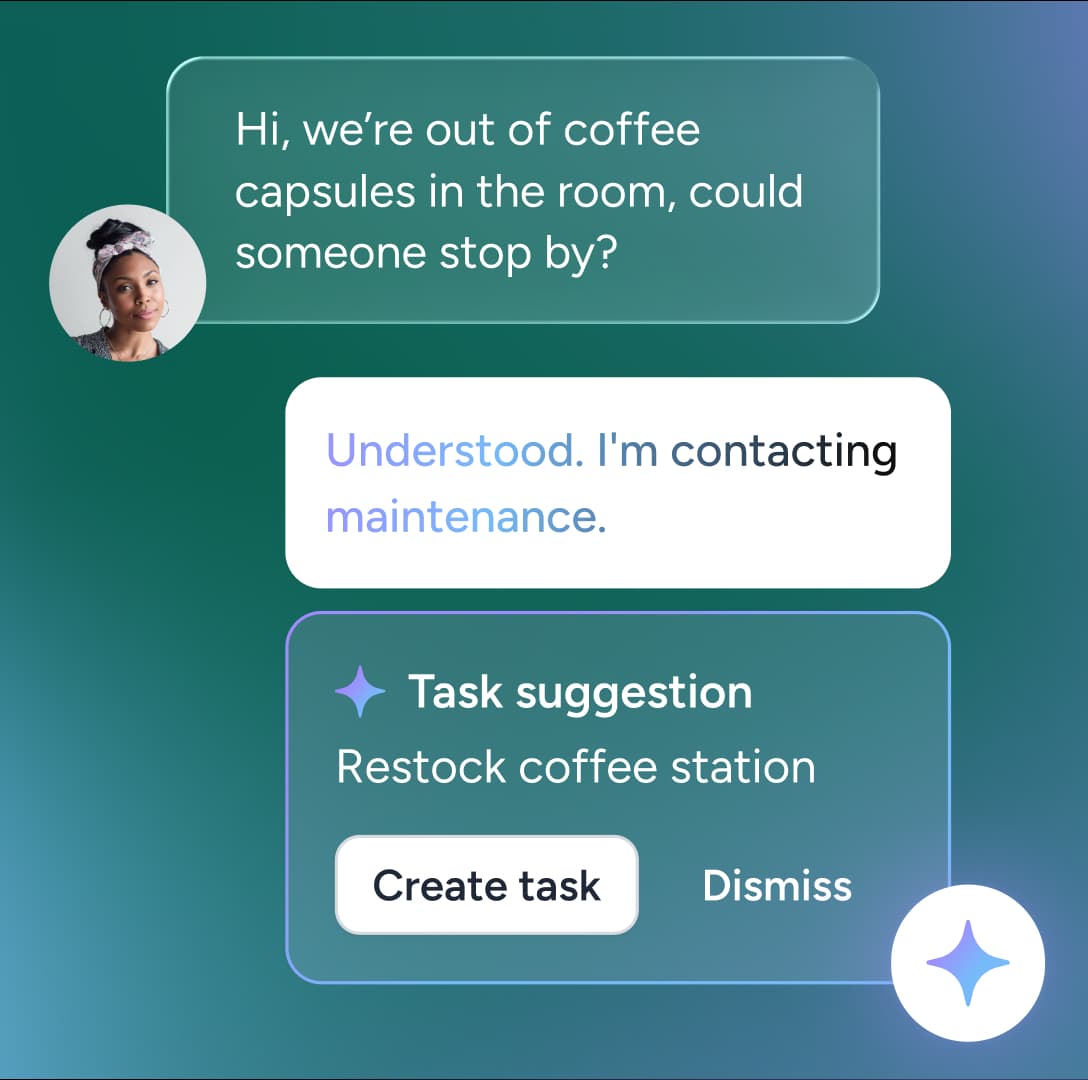
Operations: When a guest reports a problem, the agent doesn’t just acknowledge it. It creates a maintenance task with the right property, category, and urgency level, ready for your team to assign with one click. The gap between “guest reports issue” and “team acts on it” drops from hours to seconds.
Finance: The agent reconciles payments across channels and payment methods daily — matching transactions to reservations, calculating commissions, updating owner statements. It also flags fraud by detecting payment anomalies at the reservation level, catching patterns a generic fraud ruleset would miss.
Reviews: The agent tracks sentiment across your portfolio, drafts responses that acknowledge specific guest feedback, and identifies recurring themes — like repeated noise complaints at a particular property — that signal operational issues worth addressing.
None of these agents operate alone. The communication agent that creates a maintenance task shares context with the operations agent that assigns it. The revenue agent that adjusts pricing draws from the same demand data the data agent tracks. The review sentiment that flags a recurring issue informs how future guests at that property are handled.
That shared context is what separates a collection of AI features from an agentic system.
Does agentic AI replace your team?
No. And framing it that way misses the point.
Agentic AI handles the work that burns teams out — the repetitive inbox triage, the manual task creation, the monthly reconciliation grind. It doesn’t replace the judgment calls, the owner relationships, the guest interactions that require empathy and experience.
What changes is the ratio. Instead of five people spending half their day on tasks an agent can execute, you have five people spending their full day on high-level work that actually grows the business. Portfolio expansion. Owner retention. Guest experience strategy.
Same team. More execution. The headcount doesn’t change. What the headcount accomplishes does.
How do you stay in control of AI agents?
Every agent operates within boundaries you define. Confidence thresholds determine when the communication agent sends a reply versus escalating to your team. Property-level activation lets you run agents on high-volume listings while keeping manual control on others. Custom rules define how specific scenarios are handled — refund requests, late checkouts, negative sentiment.
You can review every action an agent takes, adjust any rule, and step in at any time. The agents handle volume. You set the parameters.
This isn’t a black box. It’s a system that operates transparently, within the rules you’ve already decided on.
What should you look for in an agentic property management platform?
Not every platform that claims AI is agentic. Here’s what actually matters:
- Execution, not just suggestion. Does the AI send the reply, or does it draft one for you to approve? Does it adjust the price, or show you a recommendation?
- Shared context across agents. Do communication, revenue, operations, and finance share the same data layer? Or are they separate tools that don’t know what each other did?
- Domain-specific training data. Is the AI trained on real STR operational data, or on a generic language model? The quality of output depends entirely on this.
- Granular control. Can you set confidence thresholds, active hours, property-level activation, and custom rules for every agent? If you can’t define the boundaries, you don’t have control.
- Transparency. Can you review every action the AI took and understand why? If it’s a black box, it’s a liability.