Today, any PMS can bolt on AI capabilities to suggest replies, rates, and listing descriptions. The AI is smart, but you’re still caught in several manual workflows — reviewing, approving, sending, syncing across systems that should be able to interact over a shared context.
An agentic PMS reads the situation across systems, decides the right action, and actually executes it.
Each agent is responsible for a business outcome. It acts within boundaries you set, shares context with every other agent in the PMS, and completes workflows end to end without waiting for you to push the button.
It’s a new architecture — and one that will change how you run not only guest communication, but every aspect of your operation.
TL;DR: An agentic PMS doesn’t suggest actions and wait for you to click. It reads the situation across systems, decides the right action, and actually executes it. Guesty®’s communication agent handles guest messaging as a single system — autonomously replying when confident, reading sentiment and adjusting tone, surfacing upsell opportunities mid-conversation, and creating maintenance tasks directly from message content. You set the confidence thresholds, the active hours, the rules. The agent operates within them. It’s one agent with full context across your PMS, not five disconnected tools bolted on to your inbox.
What does “agentic” actually mean for guest communication?
Guesty’s communication agent is a single system with shared context across every function. That changes what’s possible.
Picture this: a guest messages at 11 pm asking if they can check in early tomorrow. The communication agent reads the message, pulls the listing’s check-in policy, checks whether another guest is checking out that morning, and sends an accurate reply in the guest’s language and your brand voice.
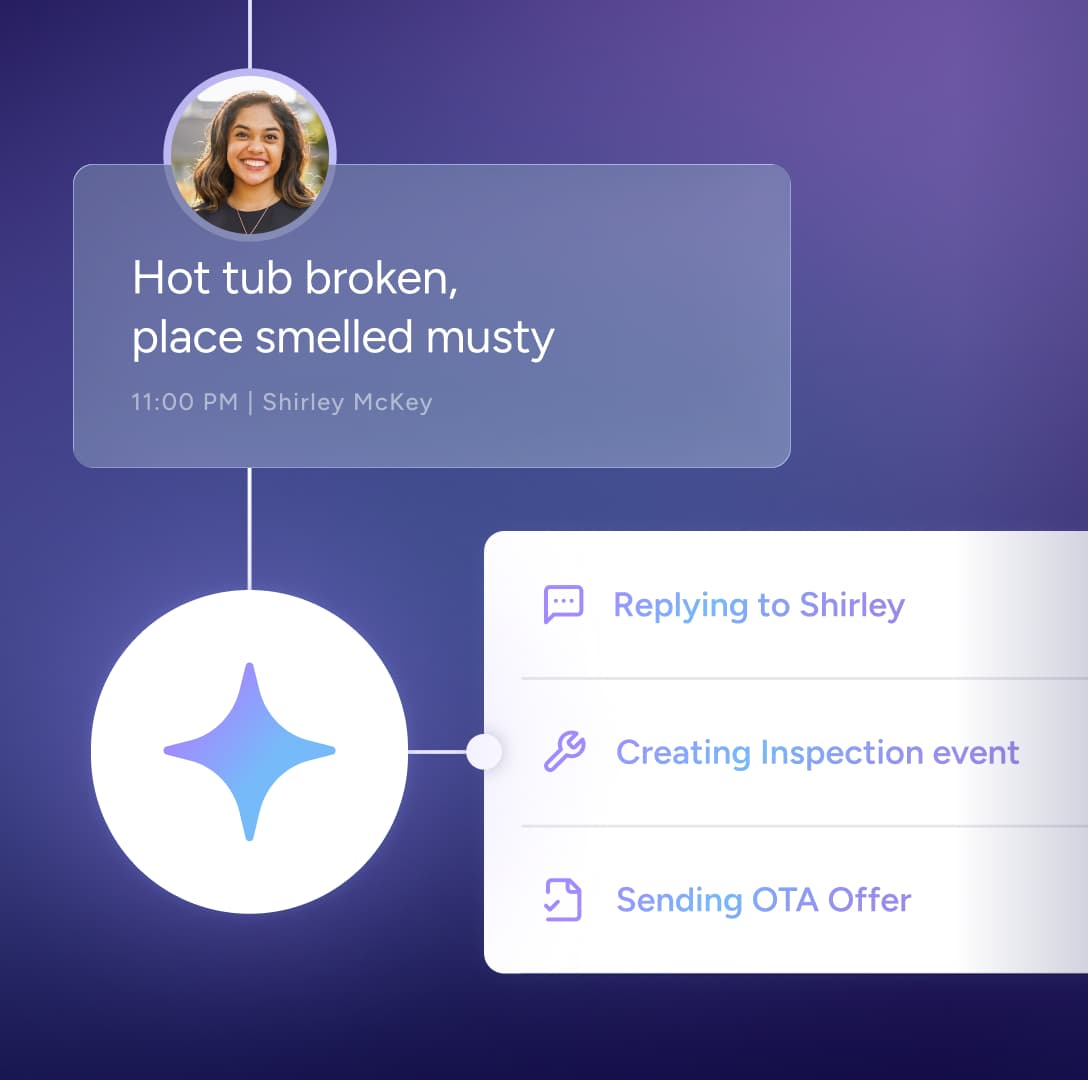
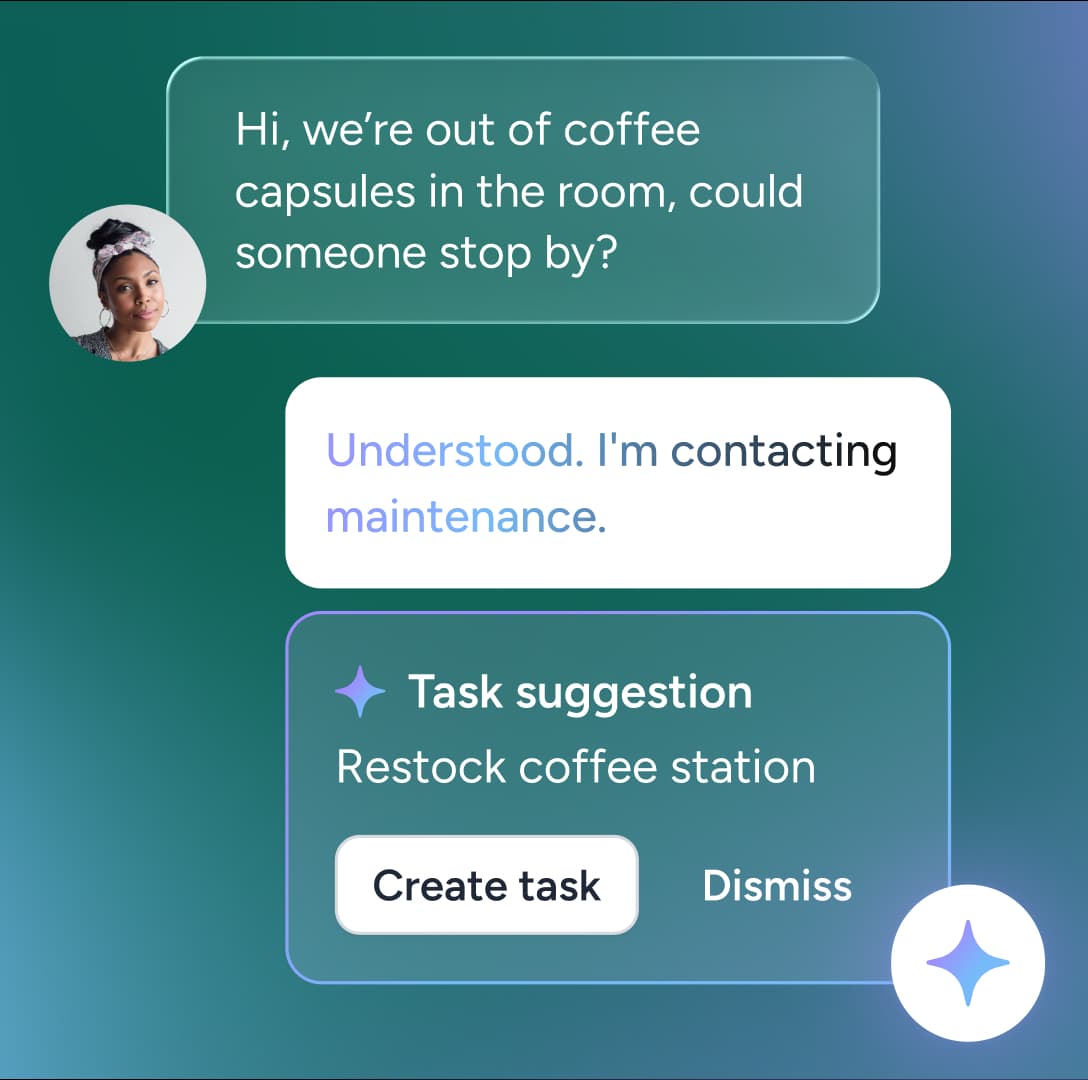
Next message: a guest says the heating isn’t working. The agent acknowledges the issue, adjusts its tone to match the frustration, and creates a pre-filled maintenance task with the right property, urgency level, and category, ready for one-click assignment.
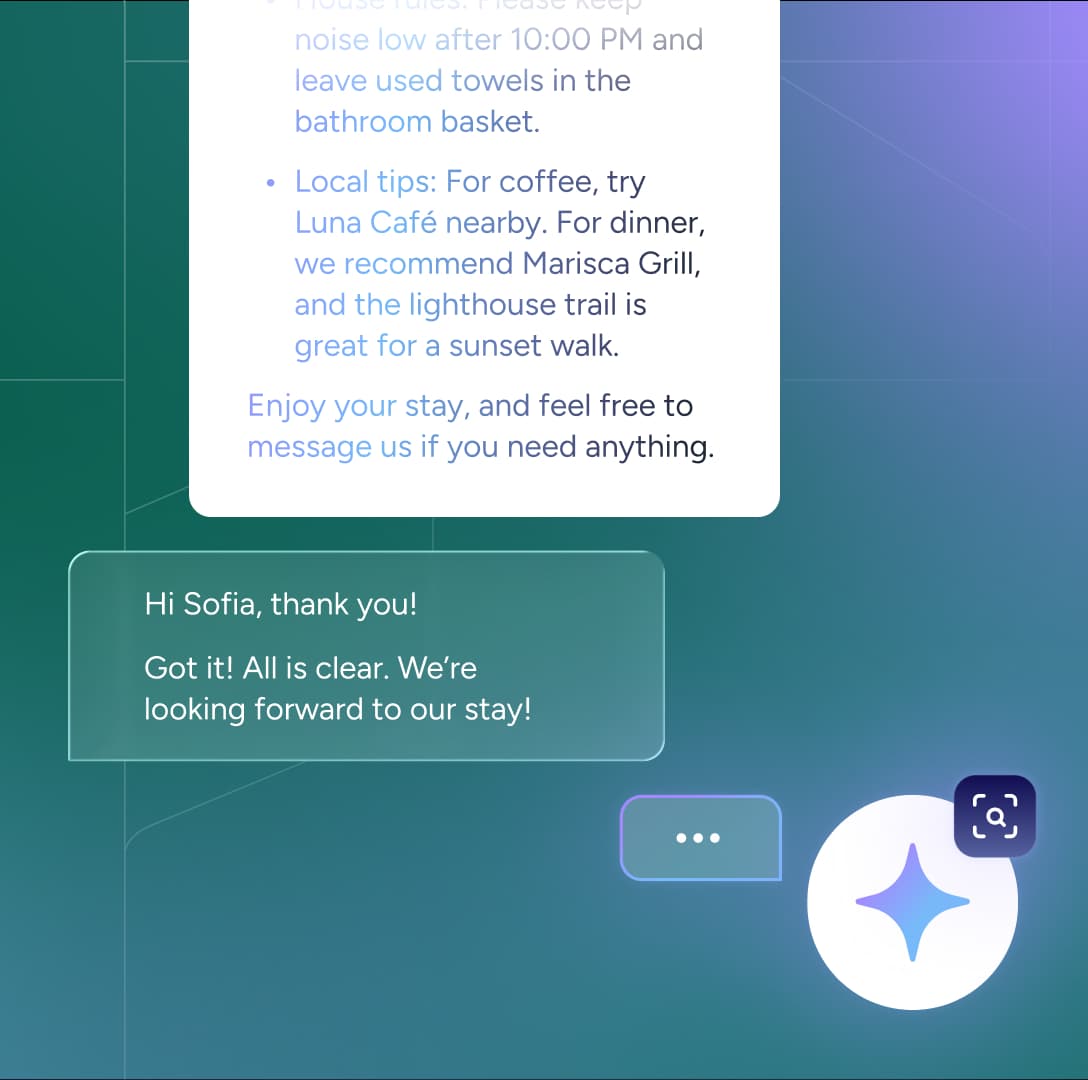
A third guest asks about restaurants nearby. The agent replies with recommendations and surfaces a relevant upsell — a guided local experience through your Guest App, timed to the moment the guest is actively planning.
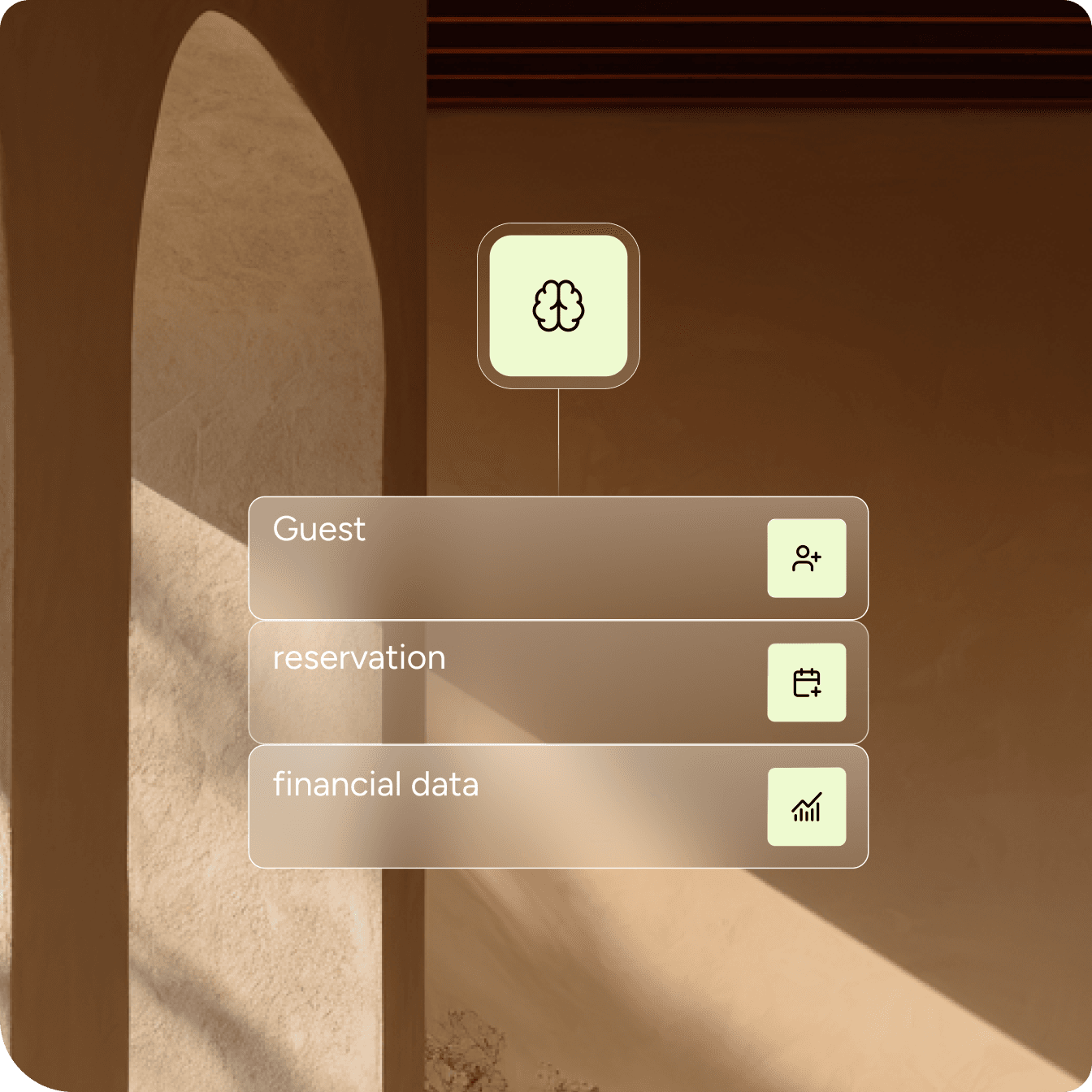
Three messages. Three different outcomes. No human in the loop on any of them. Not because the AI is guessing, but because one agent has access to your listings, reservations, policies, conversation history, and task system all at once. It reads, understands, replies, then acts.
A generic chatbot works from a script or a broad language model. It can handle “What are your check-in hours?” if someone programmed that question in advance. It falls apart the moment context matters — specific policies, specific dates, specific properties.
Guesty ReplyAI™ Autopilot pulls live data from your listings, reservations, policies, and past conversations. It doesn’t approximate your cancellation policy because it reads the one attached to the reservation. It doesn’t guess at availability because it checks the calendar.
That’s the difference between AI trained on generic hospitality content and AI that actually operates inside your PMS.
How one agent turns every message into an outcome
With an agentic PMS, every message that hits your inbox triggers a sequence of decisions. The communication agent handles them in a single pass.
Autonomous replies with guardrails
ReplyAI Autopilot sends responses based on confidence thresholds you set. You control which properties it’s active on, which message categories it handles, what hours it operates, and how long it waits before sending. Set a high confidence threshold, and it only responds to questions with clear, data-backed answers. Set it lower, and it handles more volume.
Negative sentiment? You decide whether Autopilot handles it or escalates to your team. Either way, the agent reads the emotional temperature of every message and adjusts tone accordingly. A frustrated guest asking about a billing discrepancy gets a different register than someone asking about pool hours.
Boost your short term rentals today
What controls do property managers have over AI messaging?
Full control, at every level. This isn’t a black box that starts replying and hopes for the best.
| Control | What it does |
|---|---|
| Confidence threshold | Set the minimum confidence level required before Autopilot sends a reply |
| Property-level activation | Turn Autopilot on for specific listings only |
| Active hours scheduling | Run Autopilot during off-hours, weekends, or 24/7 |
| Message categories | Choose which types of messages AI can respond to |
| Message length filter | Route long or complex messages to your team |
| Negative sentiment handling | Decide whether AI handles negative messages or escalates |
| Reply delay | Set how long Autopilot waits before sending, so responses feel natural |
| Custom rules | Define behavior for specific scenarios like refund requests or late checkouts |
| Knowledge enrichment | Upload PDFs, guides, and manuals so AI can reference property-specific information |
Revenue from conversations
Most messaging tools treat guest communication as a cost center — something to minimize. But every conversation is also a signal. A guest asking about transport options is open to recommendations. A guest messaging the day before arrival is in planning mode.
The communication agent detects these moments and surfaces relevant upsell opportunities through your Guest App — automatically sending links for early check-in, late checkout, airport transfers, or local experiences. The timing isn’t random. It’s contextual, triggered by what the guest is actually asking about, when they’re asking, and where they are in the reservation lifecycle.
That turns your inbox from a cost center into a revenue channel without adding a single task to your team’s day.
From message to dispatched task
A guest sends: “The hot water isn’t working.” In a suggestion-only system, your team reads that message, creates a maintenance task, assigns it, and follows up. Four steps, all manual, all dependent on someone catching the message fast enough.
The communication agent reads the message, detects the property issue, defines the task with the right category, urgency, and property details, then serves it to your team ready for one-click assignment. The guest gets an immediate acknowledgment. Your maintenance team gets a pre-filled task. The gap between “guest reports problem” and “team acts on it” drops from hours to seconds.
That’s not a messaging feature and a task feature working side by side. It’s one agent that reads, understands, replies, and acts across systems.
What does AI guest communication look like at scale?
At 10 listings, you can manage your inbox personally. At 50, you’re hiring for it. At 200, you’re building a team around it or losing response times.
The communication agent changes that math. It handles up to 80% of incoming messages autonomously, surfaces revenue opportunities your team would miss in the volume, and converts operational requests into assigned tasks before anyone has to triage them.
Same team. More execution. Your people focus on the guest interactions that actually need a human — the sensitive conversations, the relationship-building moments, the complex requests that benefit from judgment and experience.
The repetitive stuff? Already handled.
Why communication is just the starting line
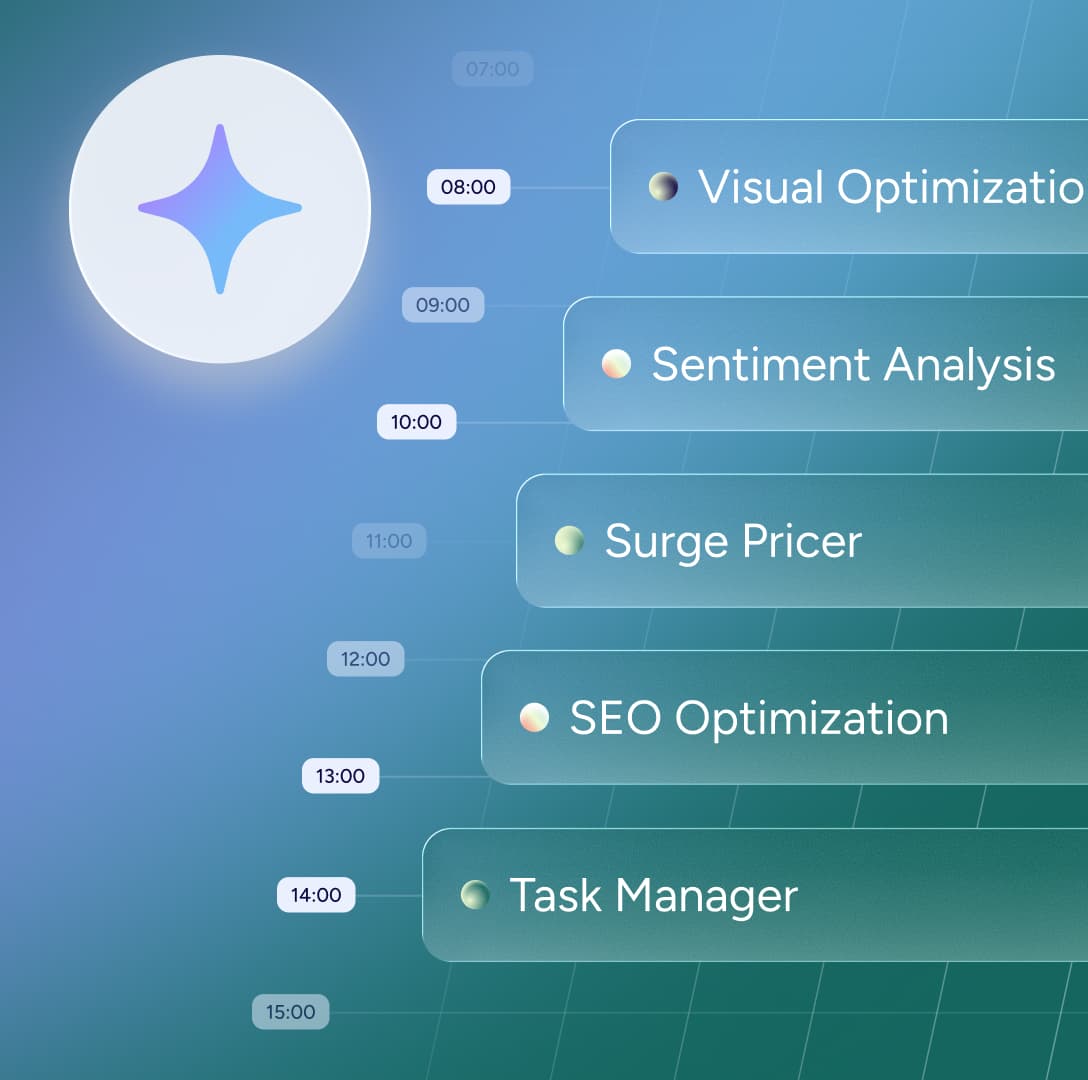
The communication agent doesn’t operate in a vacuum. It shares context with every other agent in the PMS — revenue, operations, finance, marketing, reviews.
A guest asking about extending their stay triggers a pricing check, an availability confirmation, and a reply, all in one pass. A pattern of negative sentiment across a property feeds back into how that listing is managed. A spike in maintenance requests surfaces as an operational insight, not just a resolved inbox thread.
That’s what separates a collection of AI features from an agentic PMS. One is a toolkit you operate. The other is an operating layer that runs alongside your team.
The inbox is where you’ll feel the shift first. The entire operation is where it’s headed.