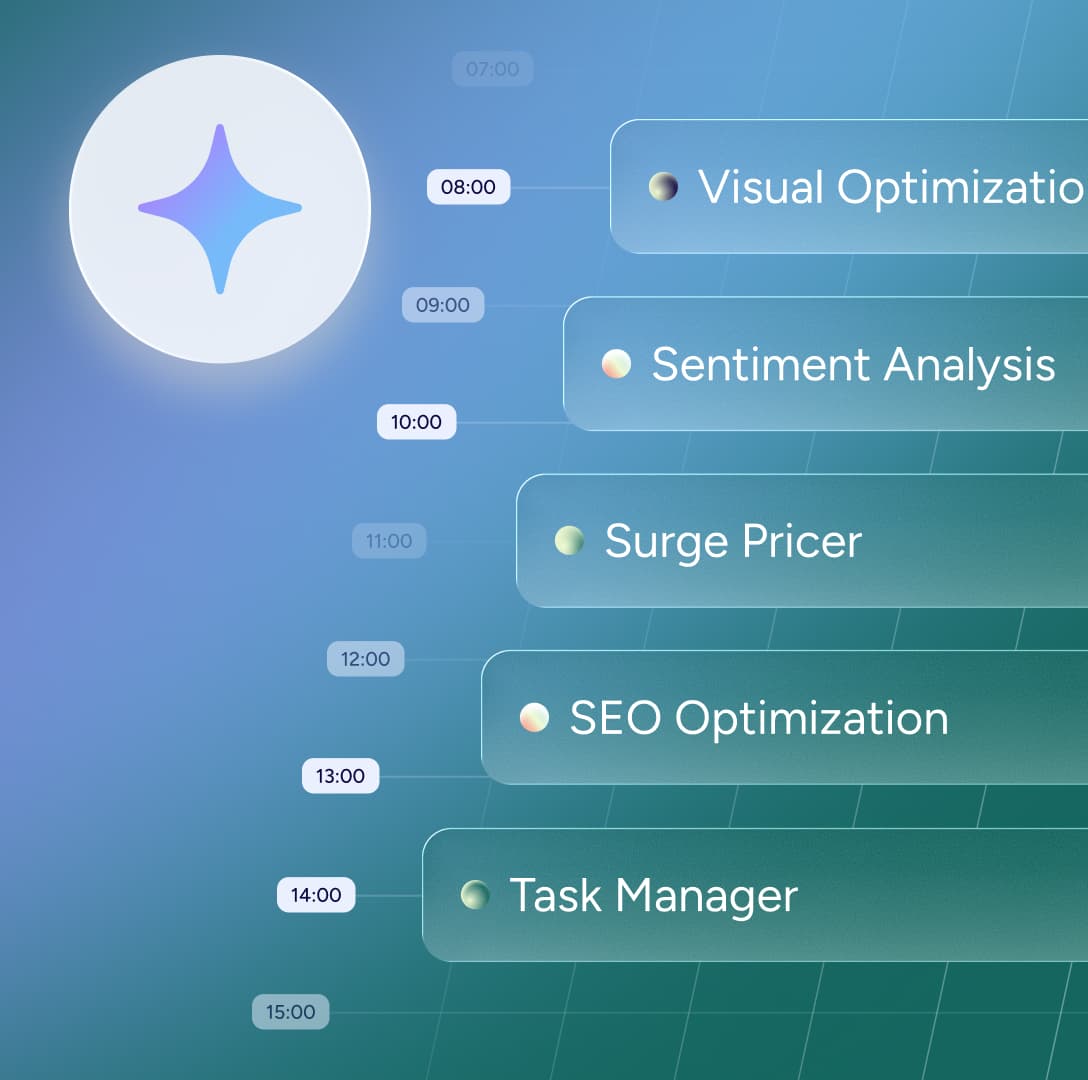
TL;DR: An agentic PMS doesn’t clock out. While you sleep, AI agents handle guest messages, flag pricing opportunities, create maintenance tasks from complaints, detect fraud, and reconcile payments — not as disconnected features running in parallel, but as a coordinated system where every agent shares context with every other, drawing from a domain-specific dataset built on 13 years of STR operations. Here’s what 24 hours actually looks like when your PMS operates on your behalf.
—
Every PMS now ships with some version of AI — a reply suggestion in the inbox, a rate recommendation on the dashboard, a sentiment score on a review. Each one works in isolation.
Your reply tool doesn’t know what your pricing tool just flagged. Your task system doesn’t know what your guests just told you. The intelligence is scattered across features that don’t share context, most of it trained on generic hospitality data rather than the operational reality of running a rental business. You’re the one stitching it all together.
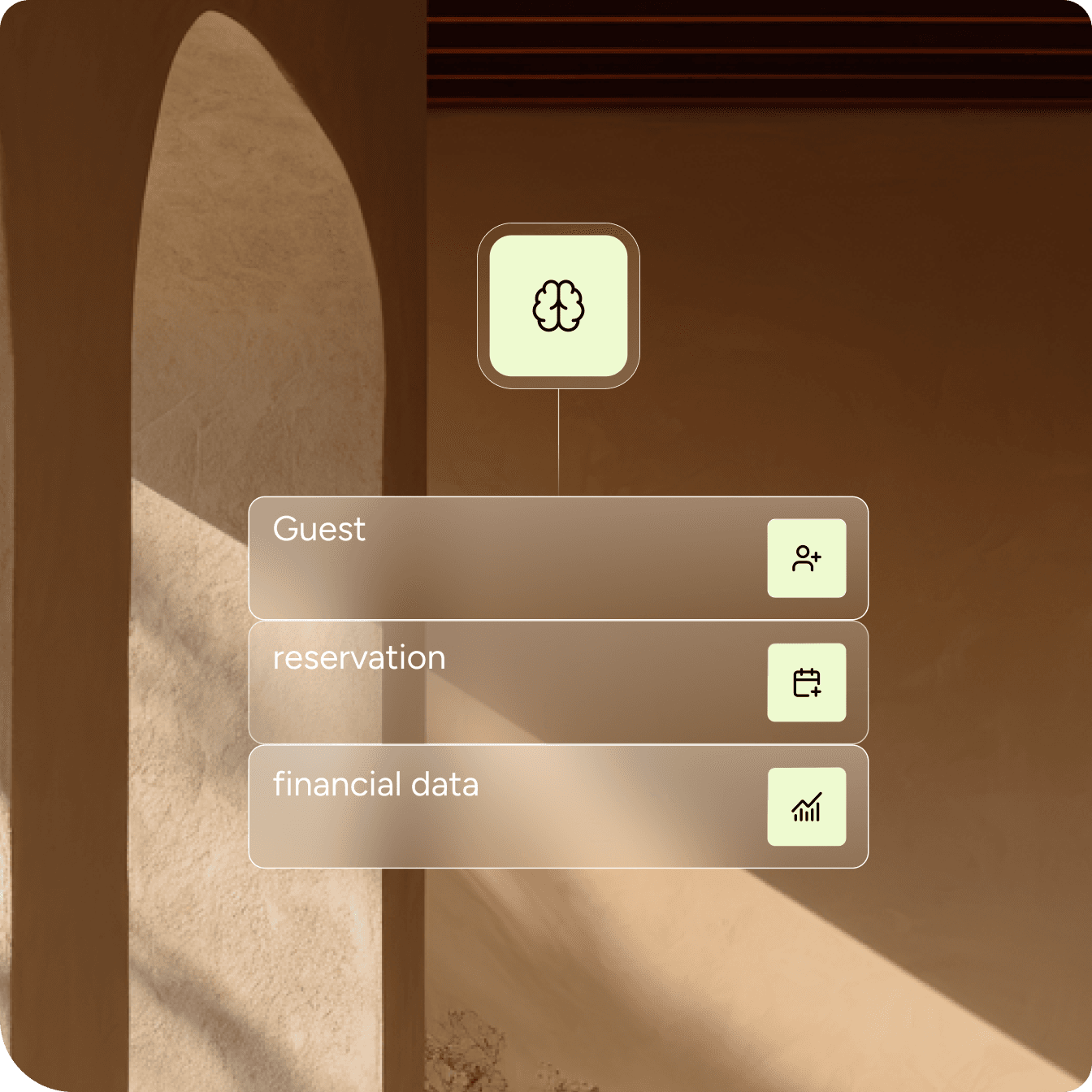
An agentic PMS works differently. Each agent is responsible for a business outcome, shares context with every other agent in the PMS, and actually executes work within boundaries you define. Not suggestions waiting in a queue. Decisions made, actions taken, outcomes delivered — informed by a dataset trained on over 500,000 active listings and more than a decade of real STR operations.
The easiest way to understand what that means in practice is to walk through a single day.
What happens in your business while you sleep?
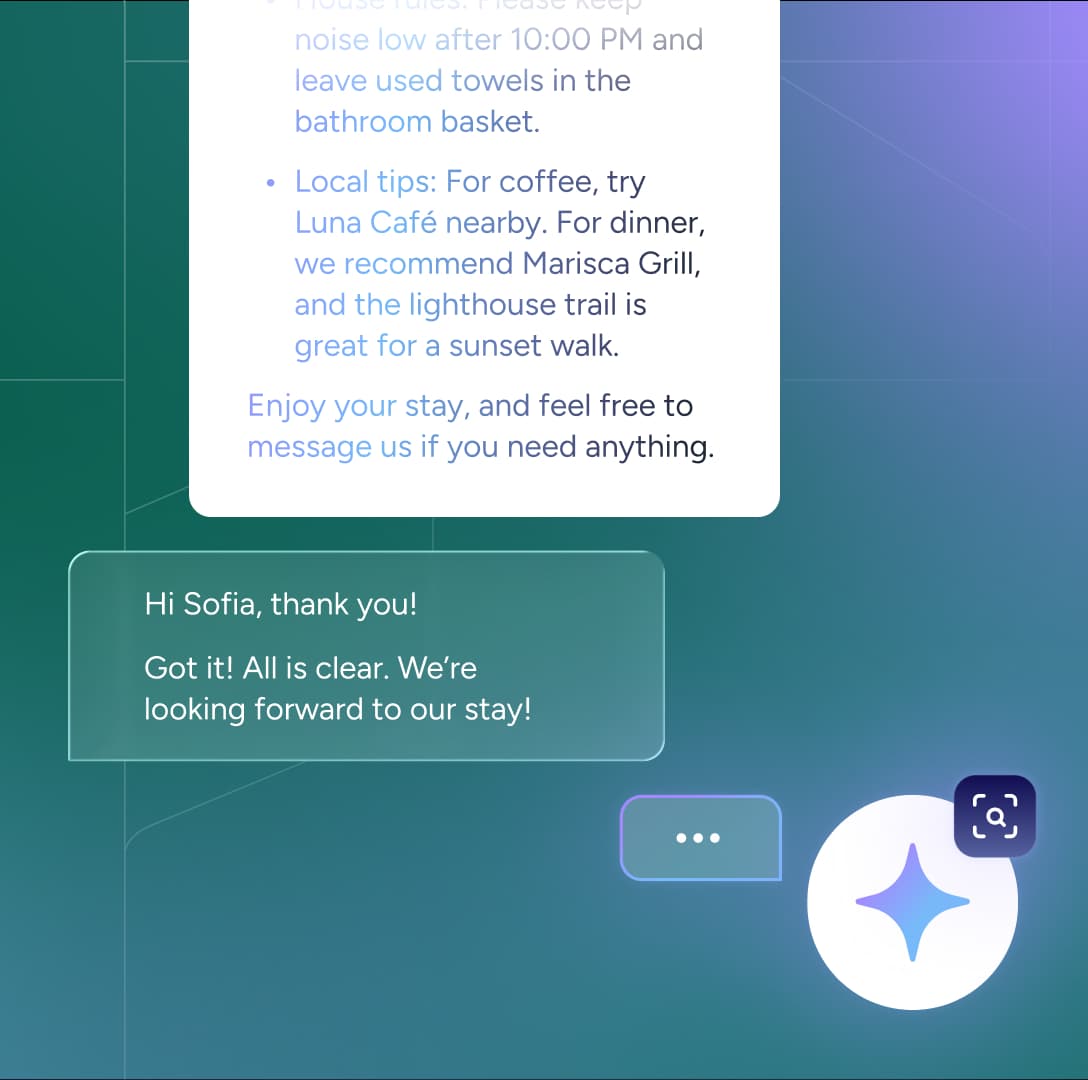
11:47pm: A guest messages asking whether early check-in is available tomorrow. The communication agent reads the message, checks the reservation calendar for that property, confirms no guest is checking out late, and replies in the guest’s language with your early check-in policy and a link to book it as a paid upgrade through your Guest App. The response isn’t templated — it’s drawn from your listing data, your policies, and patterns learned across hundreds of thousands of real STR interactions. Revenue generated. No one woke up.
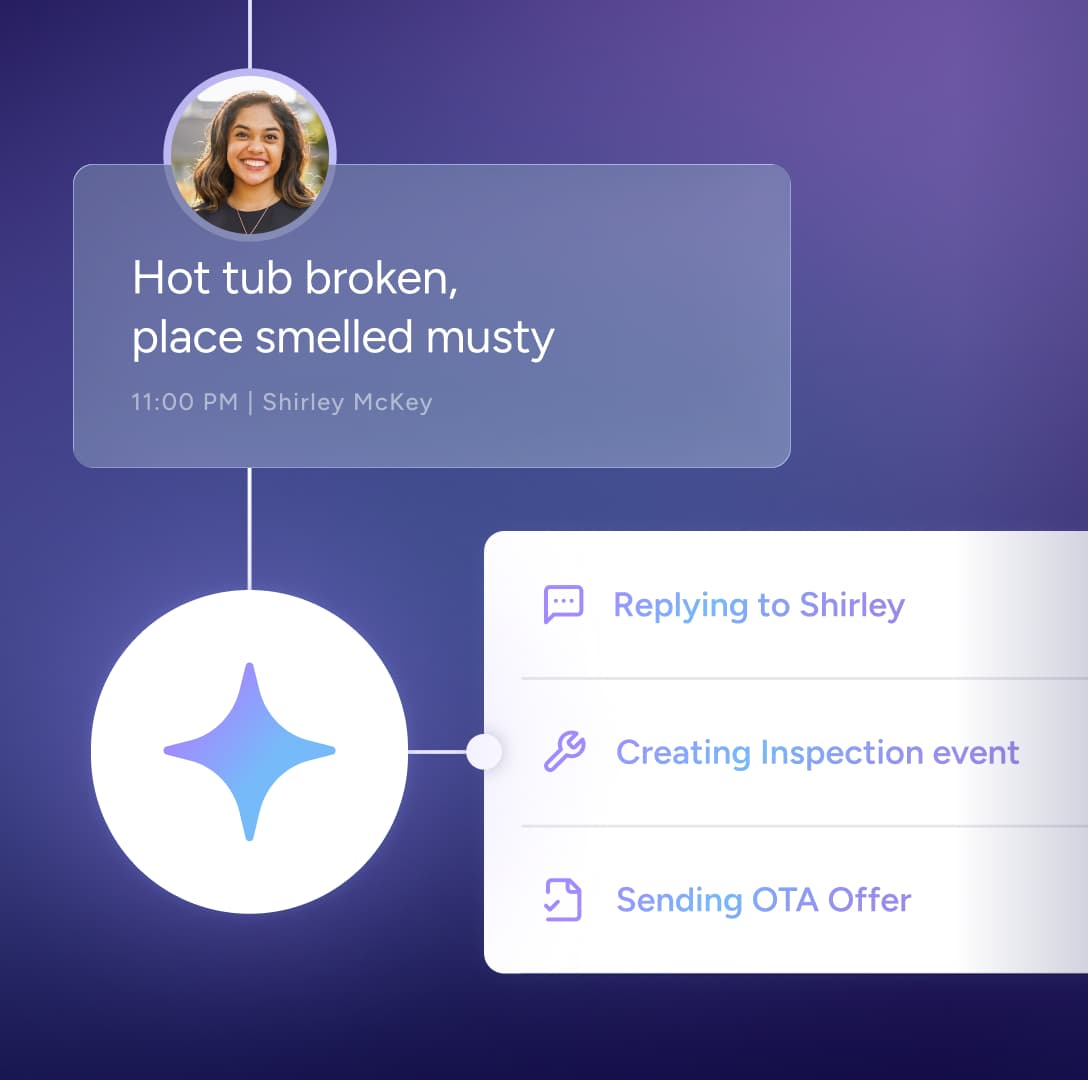
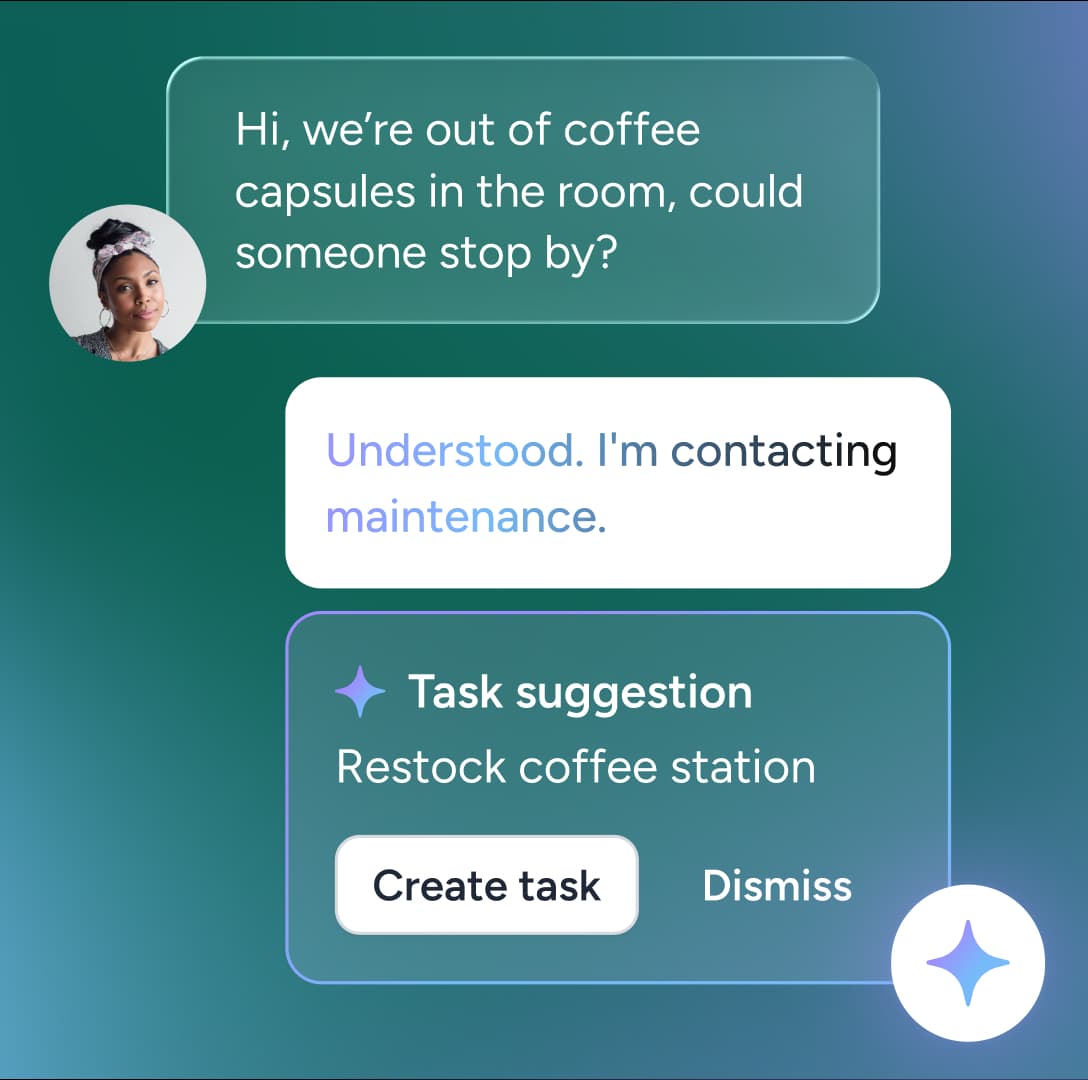
2:15am: Another guest reports that the kitchen sink is leaking. The communication agent detects the issue, adjusts its tone to acknowledge the frustration, sends an immediate response, and creates a pre-filled maintenance task — right property, right category, urgent priority — ready for your operations team to assign with one click when they log in.
5:30am: A reservation request comes in with payment details that don’t match the booking profile. Pay Protect flags the transaction, holds processing, and alerts your team. The fraud pattern was caught because the finance agent draws from reservation-level data across the platform, not a generic fraud ruleset. The fraudulent booking never reaches your calendar.
What’s waiting when you start your day?
7:00am: You open your dashboard. The overnight messages are handled. A maintenance task is queued for assignment. A fraud attempt was caught. And the revenue agent has flagged something: three competing listings in your market dropped prices overnight, but local event data shows a festival this weekend driving demand up. The pricing agent recommends holding your rate or nudging it higher — not based on a generic algorithm, but on demand patterns trained across 500K+ active listings and 13 years of real STR operational data. You confirm with one tap. The adjustment goes live across every channel.
9:30am: A guest checking in today for a five-night stay opens their Guest App and sees upsell offers already tailored to their reservation: a welcome basket, mid-stay cleaning on day three, and breakfast delivery. They add the welcome basket and a kitchen restock before they’ve even arrived — browsing, buying, revenue landing straight in your account with zero manual work. Meanwhile, a guest checking out sends a thank-you message. The communication agent responds warmly and — because sentiment is positive and the stay is ending — triggers a review request through the reviews agent.
Boost your short term rentals today
11:00am: Your Data Copilot surfaces a pattern you hadn’t spotted. Three properties in the same neighborhood have seen a drop in weekend occupancy over the past month. It cross-references pricing data, review sentiment, and channel performance, then recommends specific adjustments: update listing photos on two properties, revisit the weekend rate strategy on the third. Not a dashboard you have to interpret. An insight with a recommended action.
What runs in the background all afternoon?
1:30pm: A guest mid-stay asks about extending by two nights. The communication agent doesn’t just reply “let me check.” It checks availability on the calendar, pulls the rate from PriceOptimizer for those dates — a rate already calibrated to real-time market conditions and historical booking patterns for that property — confirms there’s no incoming reservation, and sends the guest a confirmation with the total cost. The reservation updates automatically.
3:45pm: A guest leaves a three-star review mentioning noise from a nearby construction site. The reviews agent flags the sentiment, drafts a response that acknowledges the issue and highlights what went well during the stay, and queues it for your approval. Meanwhile, the data agent logs this as a recurring theme — the third noise mention for that property this quarter.
6:00pm: The finance agent reconciles the day’s payments across every channel and payment method. Transactions matched to reservations, commissions calculated, owner statements updated. What used to take your team hours at month-end is happening in the background, every day, automatically.
Why does it matter that these agents share context?
Any PMS could theoretically build each of these capabilities as a standalone feature. Some already have. The difference is what happens between them.
The maintenance task created at 2:15am from a guest complaint? Your operations team saw it the moment they logged in because the communication agent and the task system share the same data layer. The pricing hold at 7am? Informed by the same demand signals the data agent tracks. The review response drafted at 3:45pm? It already knew about the previous noise complaints because the reviews agent and the data agent read from the same context.
That’s not five tools running in parallel. It’s one system where every action informs the next — and where every decision draws from a domain-specific dataset built on 13 years of STR operations and over 500,000 active listings.
| Time | Agent | What happened | Shared context |
|---|---|---|---|
| 11:47pm | Communication + Revenue | Early check-in reply with paid upgrade link | Calendar, upsell catalog, guest language, STR interaction patterns |
| 2:15am | Communication + Operations | Complaint acknowledged, maintenance task created | Listing data, task categories, urgency rules |
| 5:30am | Finance | Fraudulent booking flagged and held | Payment profile, reservation-level fraud patterns |
| 7:00am | Revenue + Data | Pricing opportunity surfaced, adjusted in one tap | Market data, competitor rates, event calendar, 500K+ listing dataset |
| 9:30am | Communication + Reviews | Check-out sentiment triggers review request | Sentiment score, reservation lifecycle |
| 1:30pm | Communication + Revenue | Stay extension confirmed with live pricing | Calendar, real-time rates, historical booking patterns |
| 6:00pm | Finance | Day’s payments reconciled across channels | Reservations, commissions, owner splits |
What does your role actually become?
This isn’t about removing you or your team from the operation. It’s about changing what you spend your time on.
In this 24-hour window, you made two decisions: confirm a pricing adjustment and approve a review response. Everything else — the replies, the tasks, the upsells, the fraud detection, the reconciliation — happened within rules you already set.
Your team didn’t spend the morning triaging an inbox or second-guessing AI recommendations built on generic data. They focused on high-level work that actually grows the business: owner relationships, portfolio expansion, guest experience strategy.
Same team. More execution. That’s the always-on rental business.