A guest requests a two-night extension. Your communication AI sends a polite “let me check on that.” Meanwhile, your pricing tool has just raised rates for those dates because of a local event. Your operations system has a cleaning crew booked for the original checkout. Three agents, all individually smart, all making the right call in isolation — and the guest gets a reply three hours later with an outdated rate quote and a scheduling conflict you now have to untangle manually.
Nothing went wrong with the AI. Everything went wrong with the architecture.
Every PMS in the industry ships AI agents now, but if the capabilities are isolated and the agents can’t actually talk to each other, you’re simply maintaining a better-informed bottleneck.
TL;DR: Every PMS is building AI agents. Very few are building the connections between them. An AI agent that replies to guests is useful. An AI agent that replies to guests while checking availability, pulling live pricing, creating tasks, and informing the revenue strategy — all in one pass — is a different category entirely. Shared context across agents is what turns a collection of smart features into a system that actually runs your operation.
Why do isolated AI agents create new problems?
Intelligent tools that operate in silos not only miss opportunities but actively create friction.
Your messaging AI drafts a response about cancellation terms. But it doesn’t know the finance agent just processed a partial refund for the same reservation five minutes ago. So the guest gets conflicting information — one message quoting the full cancellation fee, another confirming money back in their account.
Your revenue AI raises the rate on a property for this weekend. But it doesn’t know the reviews agent just flagged a pattern of noise complaints that’s dragging that listing’s average rating down. You’re pricing up on a property that needs attention, not demand.
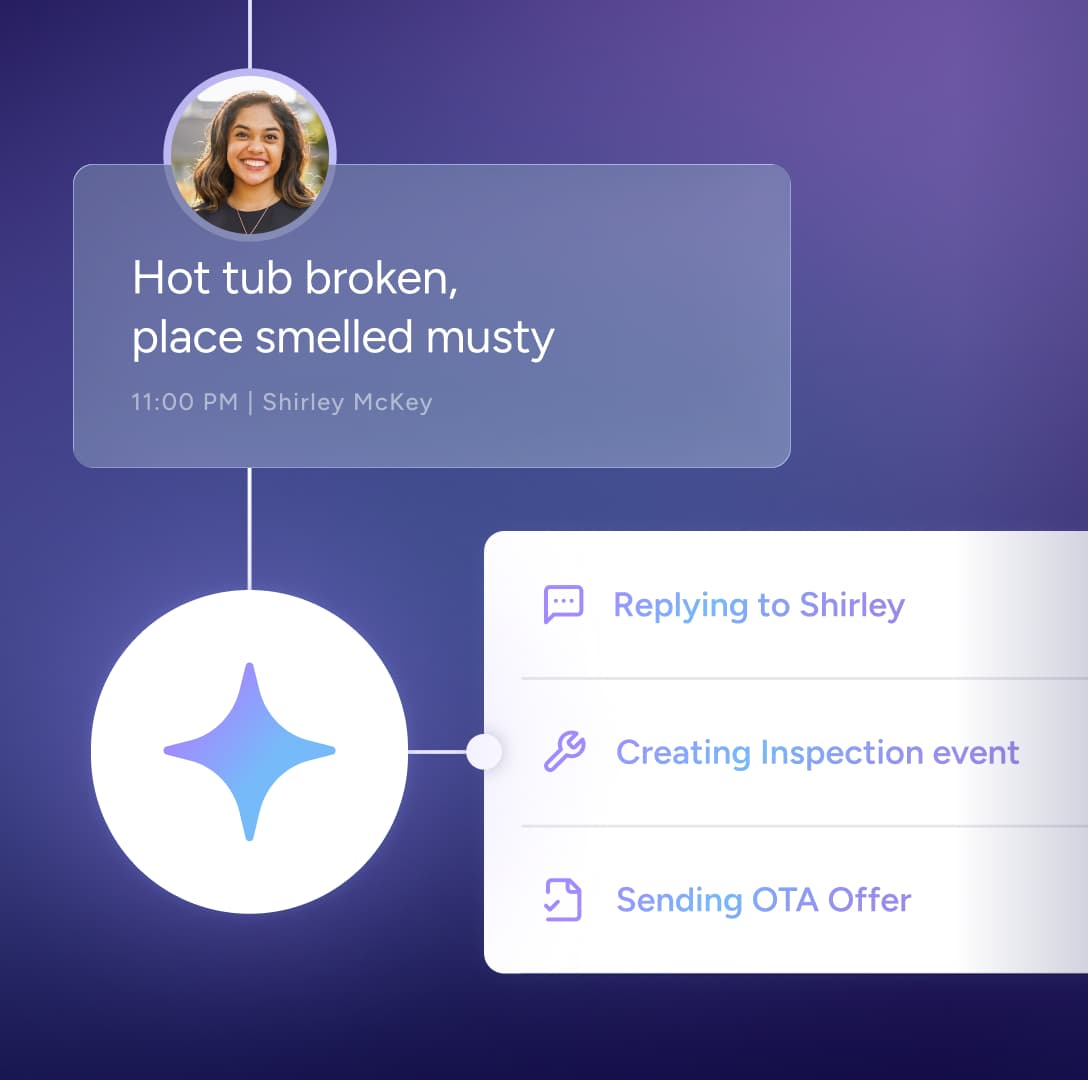
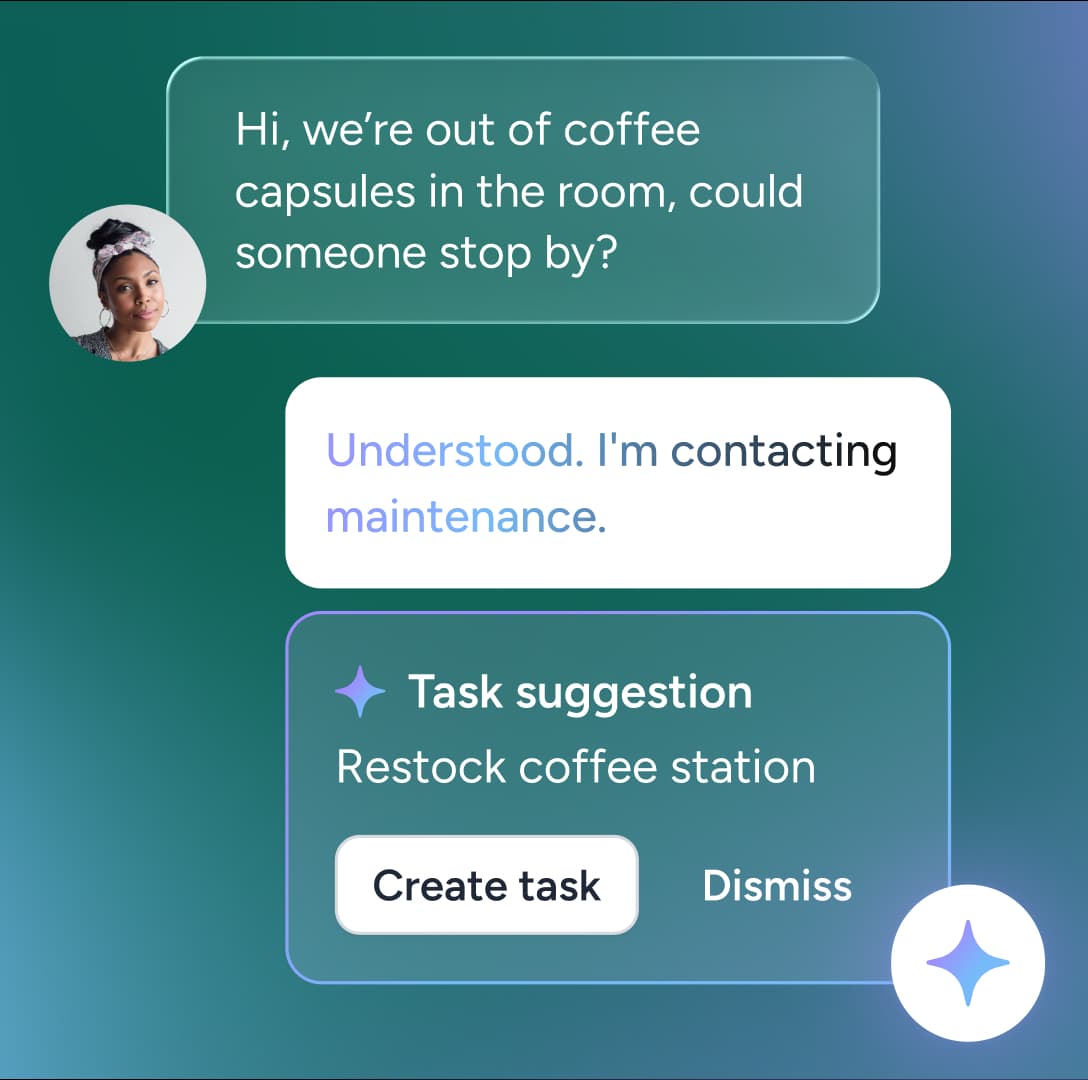
Your operations AI creates a maintenance task from a guest complaint. But it doesn’t know the communication agent already told the guest someone would be there within the hour — a promise your operations team didn’t make and can’t keep on that timeline.
Each agent is doing its job. The failure is between them. And the bigger your portfolio gets, the more often these collisions happen.
What does shared context actually mean in practice?
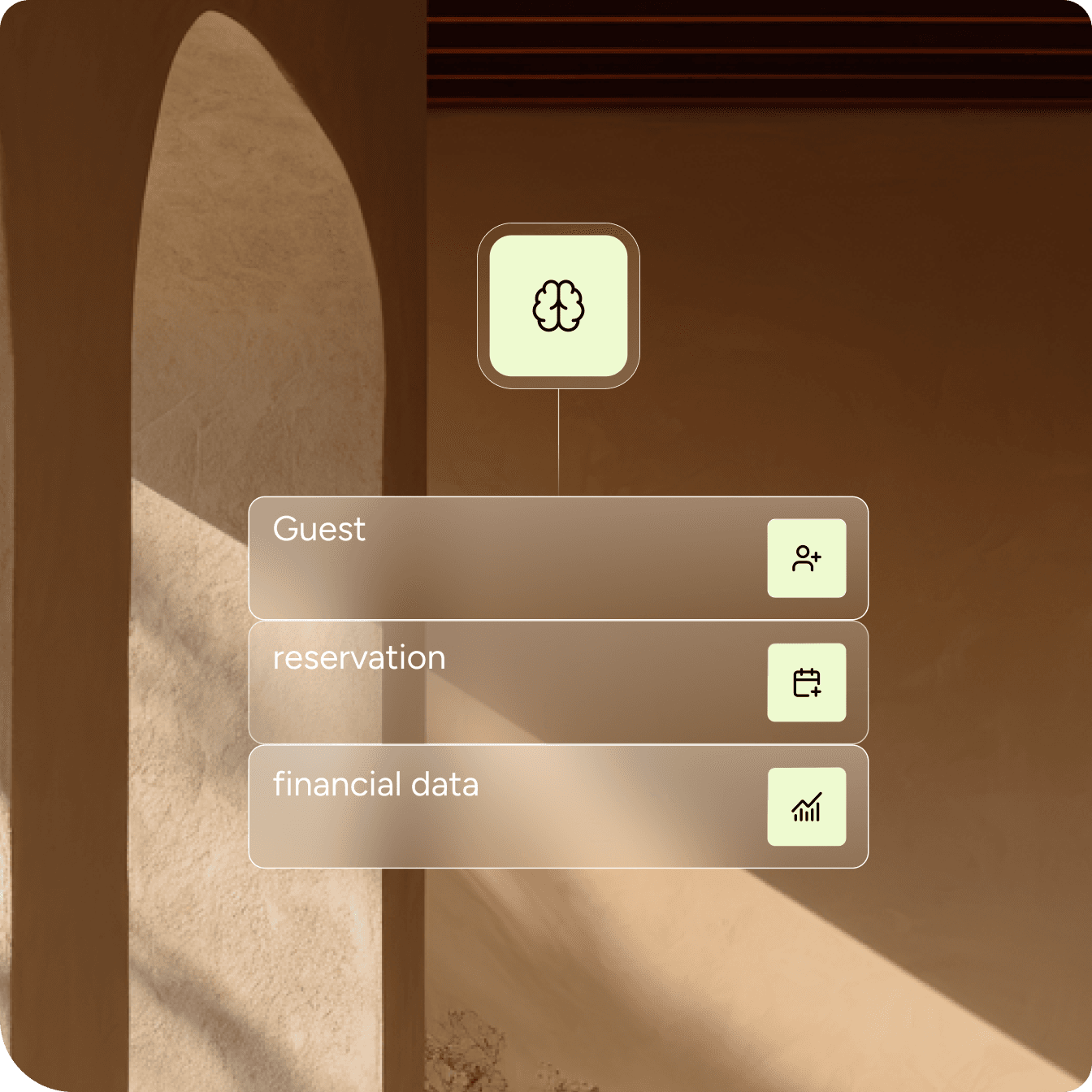
Shared context means every agent in your PMS reads from and writes to the same data layer. Not synced copies. Not API handoffs with a two-minute lag. The same live information, in real time.
When the communication agent receives that stay-extension request, it doesn’t send “let me check.” It checks. It reads the calendar for availability, pulls the current rate from the revenue agent for those exact dates, confirms no incoming reservation, and replies to the guest with a confirmed total — all in one pass. The reservation updates. The cleaning schedule adjusts. No human touched it.
That only works if the communication agent, the revenue agent, and the operations layer share the same context. The moment any one of them operates on its own copy of the data, the response is slower, less accurate, or both.
Where does shared context change the outcome?
| Scenario | Without shared context | With shared context |
|---|---|---|
| Guest asks to extend stay | Communication sends “let me check,” waits for manual pricing and availability confirmation | Communication checks calendar, pulls live rate, confirms and replies in one pass |
| Guest reports broken appliance | Message acknowledged; task created separately hours later when someone reads the inbox | Agent acknowledges, adjusts tone for frustration, creates pre-filled task with correct property and urgency instantly |
| Positive checkout message | Gets a thank-you reply | Gets a thank-you reply and a review request triggered by positive sentiment score |
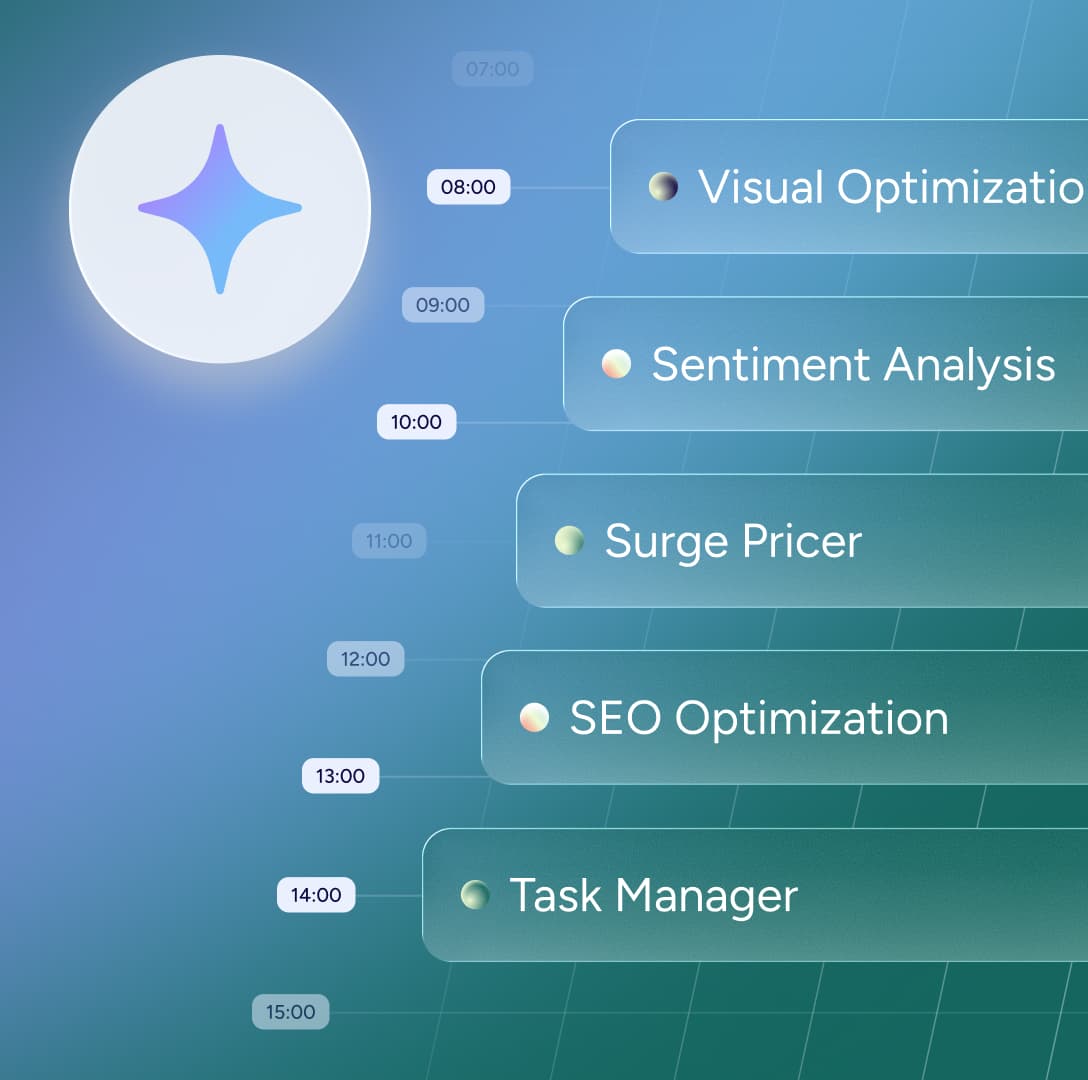
| Pricing surge detected | Rate adjusted, but communication still quotes yesterday’s rate to incoming inquiries | Rate adjusted and immediately reflected in every guest-facing reply |
| Noise complaint pattern across reviews | Buried in review data; no one connects it to the pricing strategy | Data agent flags the pattern to both the reviews agent and the revenue agent, informing response drafts and rate adjustments |
| Fraudulent payment detected | Transaction flagged; reservation may already be confirmed | Finance agent holds the booking before it reaches the calendar, alerts the team |
Boost your short term rentals today
In every case, the AI is equally smart. The difference is whether it knows what the other agents know.
Why can’t API integrations replicate shared context?
This is the question operators ask when they’re evaluating whether to consolidate tools or keep stitching their stack together.
API integrations sync data between systems. That sync has a lag — sometimes seconds, sometimes minutes, sometimes longer depending on the platforms and the volume. For a monthly report, that’s fine. For a guest expecting an instant reply about extending their stay, it’s the difference between a confirmed booking and a “let me get back to you.”
More fundamentally, API-connected tools don’t share decision-making context. Your messaging tool can pull a rate from your pricing tool. But it doesn’t know why that rate was set — whether it was a demand surge, a competitive adjustment, or a manual override. It can’t factor that reasoning into how it frames the reply. It just passes a number.
Agents inside one PMS don’t pass data between systems. They operate within the same system. The communication agent doesn’t request the rate from the revenue agent through an API call. It reads it from the same data layer, with the same context about why that rate exists and what demand signals informed it.
That’s the difference between integration and shared context. One connects systems. The other eliminates the need to.
What makes the data layer itself matter?
Shared context is only as good as the data underneath it. Agents coordinating across a thin dataset produce fast, coordinated mediocrity.
The quality of every decision — the reply, the rate, the task, the fraud flag — depends on what the agents are trained on. A communication agent drawing from generic hospitality data will coordinate with a revenue agent drawing from generic market data, and the output will be generic. Fast, but generic.
An agentic PMS trained on over 500,000 active listings and 13 years of real STR operational data produces a different quality of output. The communication agent understands how guests actually ask about early check-in across different markets and languages. The revenue agent reads demand patterns that only emerge at scale. The reviews agent recognizes sentiment trends that predict operational issues before they escalate.
Shared context is the architecture. Domain-specific data is the substance. You need both.
What does this mean for how you evaluate a PMS?
The next time you’re comparing platforms, ask this: when one agent acts, do the others know about it?
Not “do they eventually sync.” Not “can I set up an integration.” Do they share the same live data, in real time, with full visibility into each other’s actions and reasoning?
If the answer is no, you’re managing a collection of AI features. If the answer is yes, you’re running an agentic system.
The AI arms race in property management is real. But the race everyone’s watching — who can build the smartest individual agent — is already a solved problem. The race that matters is who can build the system where those agents actually work together.
That’s the hard part. And it’s the only part that scales.