TL;DR: The next three years won’t be defined by new AI features arriving in your PMS. They’ll be defined by what your team stops doing manually. Guest communication, dynamic pricing, financial reconciliation, and operational coordination are all moving toward autonomous execution — handled by AI agents that share context across your entire operation and act within rules you set. The always-running rental business isn’t a pitch. It’s the operating model that’s already emerging.
—
The biggest change in STR operations over the next three years won’t be a new feature launch or a flashier dashboard. It’ll be the moment you realize your business ran overnight — messages answered, rates adjusted, tasks created, payments reconciled — and nobody on your team touched any of it.
That’s not a prediction. It’s already happening in parts. Communication agents are sending replies autonomously. Pricing agents are adjusting rates based on real-time demand. The pieces exist. What’s changing is how fast they connect into a single operating layer that runs end to end.
The operators who understand that shift early won’t just save time. They’ll operate at a scale their current team size was never designed to handle.
Where are STR operations today, and what’s about to change?
Most operators in 2026 sit somewhere in the middle of the AI adoption curve. They’ve adopted AI-assisted tools — reply suggestions, pricing recommendations, automated listing descriptions — but the workflow underneath is still largely manual. You review, you approve, you send. The AI makes you faster. It doesn’t make your operation autonomous.
That middle ground is about to compress. Fast. Here’s why: the gap between AI that suggests and AI that executes is closing, and the operators who cross it first gain a compounding advantage. Every month an agent runs your guest communication is a month of data that makes that agent more accurate. Every quarter of AI-managed pricing is a quarter of demand patterns the system learns from. The longer you wait, the wider the gap between your operation and the ones that started earlier.
This isn’t about early adoption for its own sake. It’s about what your data is doing while you’re still clicking “approve.”
How will guest communication change by 2028?
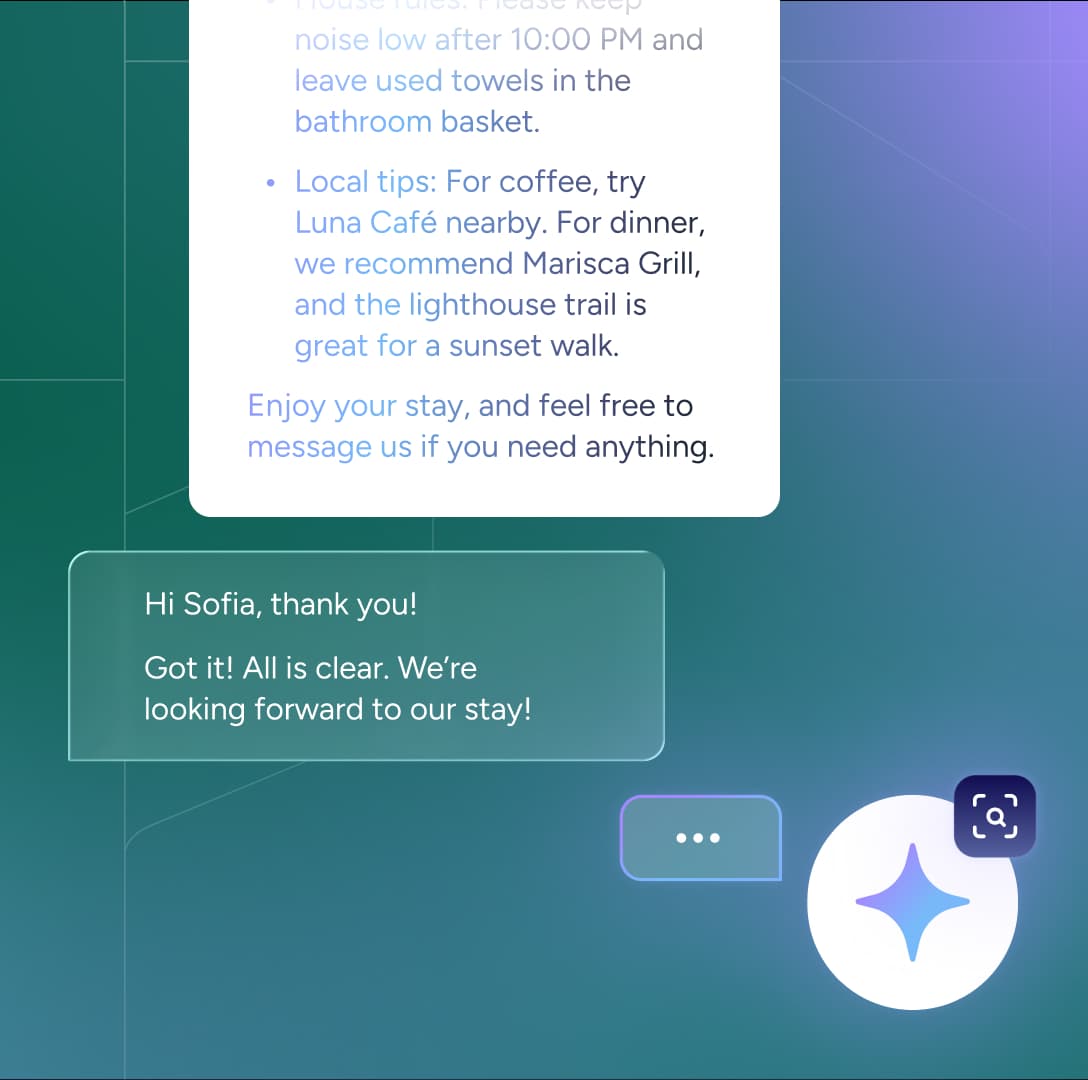
Today, ReplyAI Autopilot already handles the majority of routine guest messages autonomously — check-in logistics, Wi-Fi questions, parking, amenity details. It reads your listing data, your reservation context, your policies, and responds in the guest’s language and your brand voice. It adjusts tone for sentiment. It escalates what it can’t confidently answer.
That’s the baseline. Here’s where it’s headed.
Within the next 18 months, the communication agent won’t just reply to what guests ask. It will anticipate what they need based on where they are in the reservation lifecycle. A guest arriving tomorrow doesn’t just get check-in details when they ask. They get proactive information — directions, access codes, local recommendations — surfaced before the question lands in your inbox.
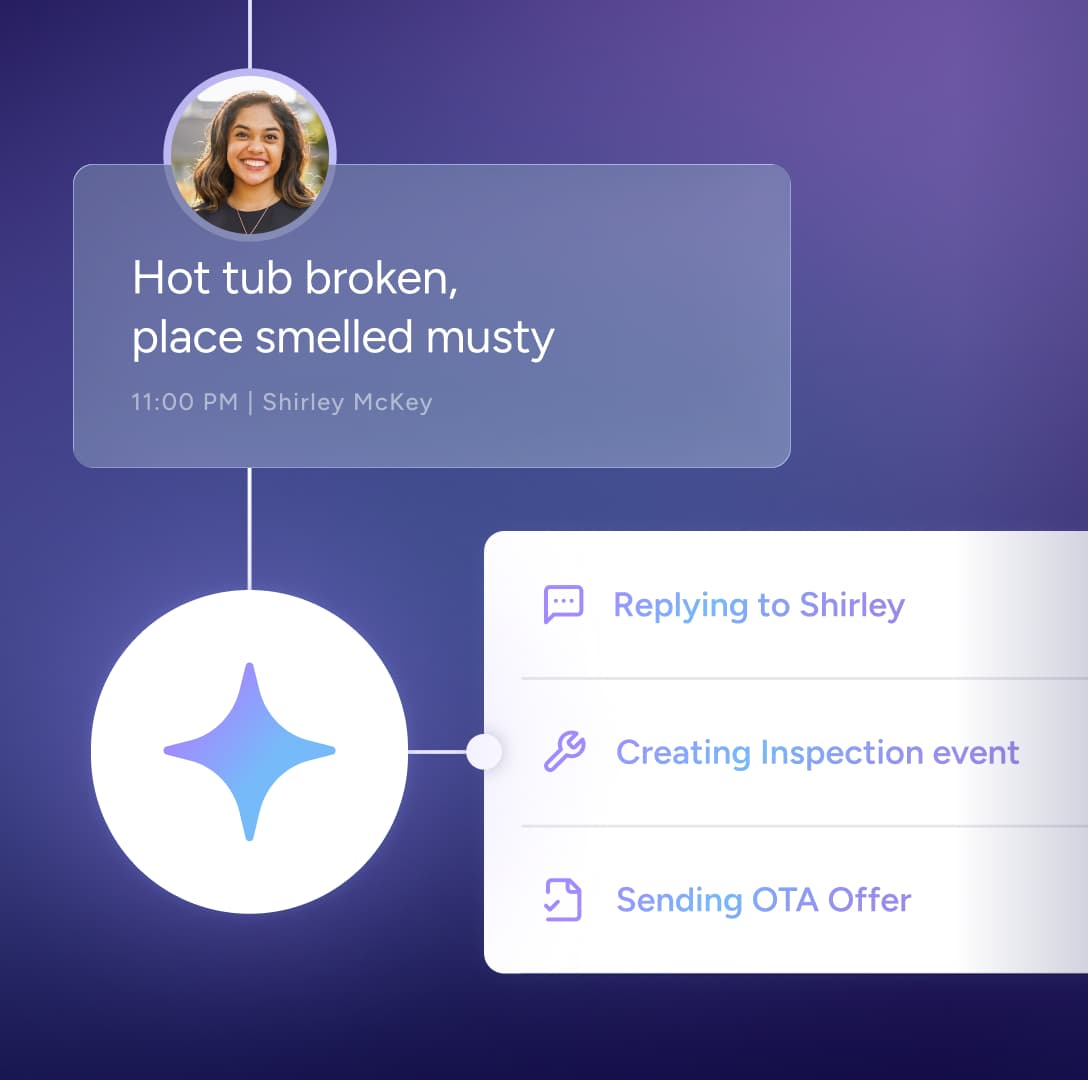
By 2028, the communication agent will coordinate with every other agent in real time during a single conversation. A guest asking about extending their stay will get a confirmed price, an updated calendar, and an adjusted cleaning schedule — all in one reply, all without a human in the loop. A guest mentioning a noise issue will trigger a sentiment flag, an operational task, and a pricing note on that listing, all from the same message.
The inbox stops being a place your team works in. It becomes a system that works for them.
How will revenue management evolve?
Manual pricing is already a liability. But even AI-assisted pricing — where the system recommends and you approve — leaves gaps. You review the recommendation in the morning. The market shifted overnight. The rate you approved is already stale by the time it goes live.
PriceOptimizer already closes part of that gap by evaluating demand signals and adjusting rates in real time. But the next evolution isn’t just faster pricing. It’s pricing that’s informed by everything else happening in your operation.
A cluster of negative reviews on a property? The revenue agent factors that into the rate strategy before you notice the pattern. A spike in booking inquiries for a specific weekend? Rates adjust before the competition responds. A guest conversation that signals willingness to extend? The revenue agent has already calculated the optimal rate for those additional nights.
By 2028, revenue management won’t be a function you monitor. It’ll be an agent that operates continuously, drawing from communication data, review sentiment, market conditions, and historical booking patterns trained on hundreds of thousands of active listings. The pricing decision and the pricing execution happen in the same moment.
What happens when operations run autonomously?
Boost your short term rentals today
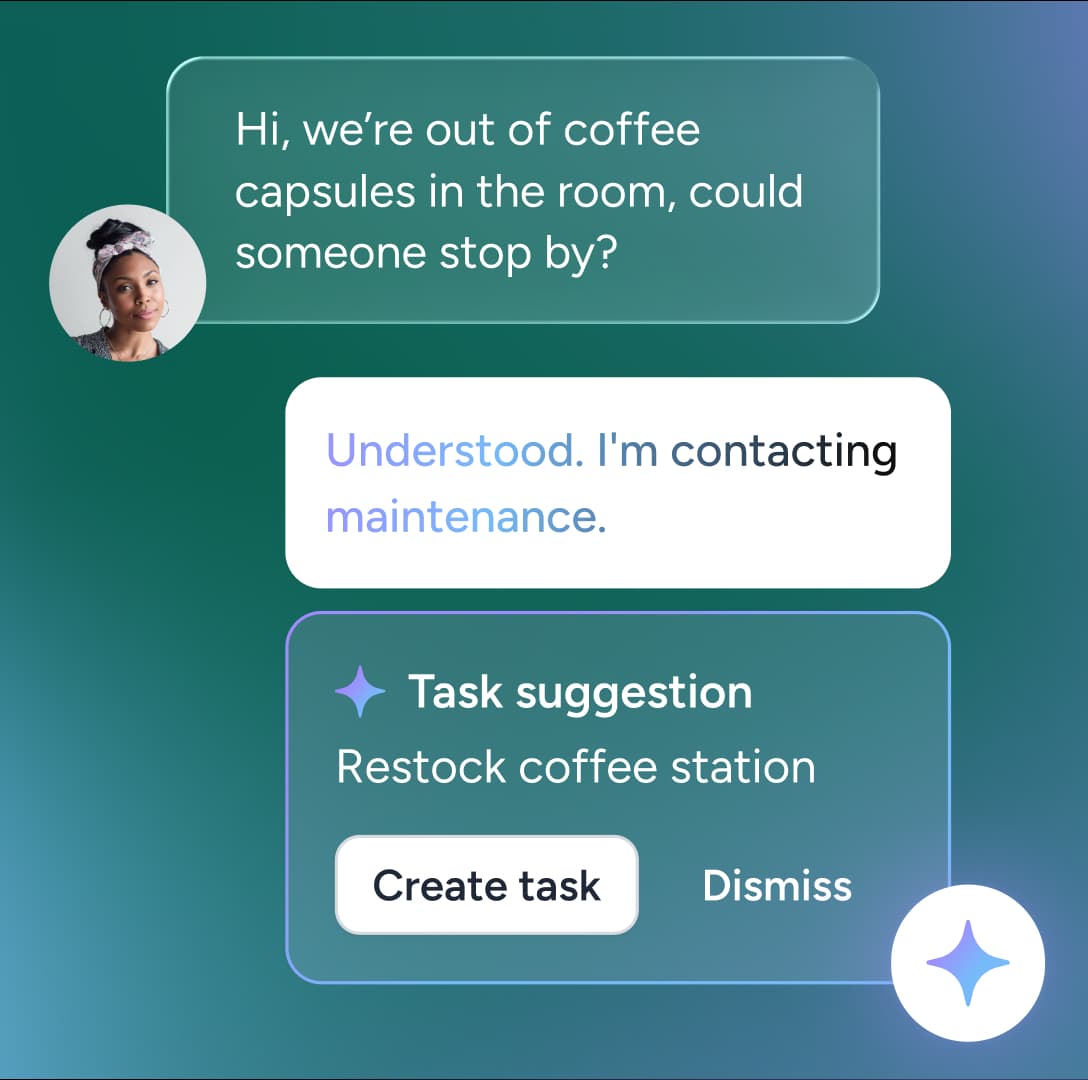
Operations is where the execution gap hits hardest today. A guest reports an issue. Someone on your team reads the message, creates a task, assigns it, follows up. Four manual steps, each dependent on someone seeing the message fast enough and knowing what to do with it.
AI Task Creation already compresses this — the communication agent detects the issue, creates a pre-filled task with the right property, category, and urgency, and serves it ready for assignment. But the trajectory goes further.
By 2027, the operations agent won’t just create tasks from messages. It will coordinate scheduling based on team availability, priority, and property proximity. A maintenance request at a beachfront property and a cleaning turnover at the unit next door will be sequenced together because the agent knows both need attention and the same team is nearby.
By 2028, operational coordination becomes predictive. The agent identifies patterns — this property generates HVAC complaints every June, this unit needs post-checkout deep cleans more often than others — and pre-schedules tasks before the guest reports anything. Reactive operations become proactive operations, and the shift happens without adding headcount.
How will financial operations keep pace?
Financial reconciliation is one of the most time-intensive and least visible parts of running an STR business. Matching payments to reservations, calculating commissions, updating owner statements, catching discrepancies — it’s hours of work that happens at month-end and rarely gets the attention it deserves.
The finance agent is already moving this from monthly to daily. AI Reconciliation matches transactions to reservations in real time. Pay Protect catches payment anomalies at the reservation level, drawing from patterns across the platform rather than generic fraud rulesets.
Over the next three years, this accelerates. By 2028, financial operations won’t be a task on your calendar. Owner statements will update continuously. Commission calculations will reconcile as payments land. Fraud detection will evolve from pattern matching to behavioral prediction — flagging not just anomalous payments but anomalous booking behavior that precedes them.
The operators running the tightest margins will be the ones whose finance agent never sleeps.
What does the always-running business actually look like?
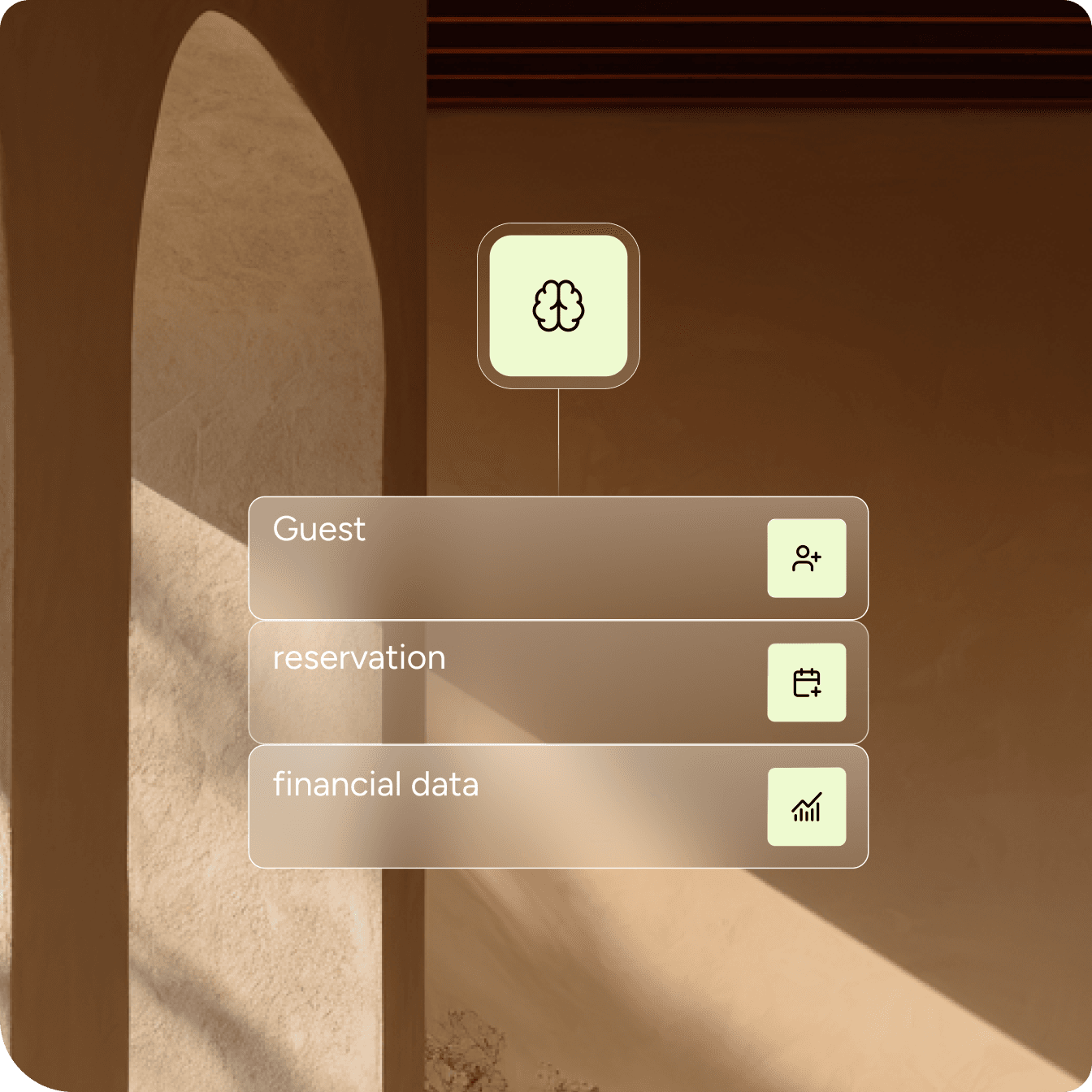
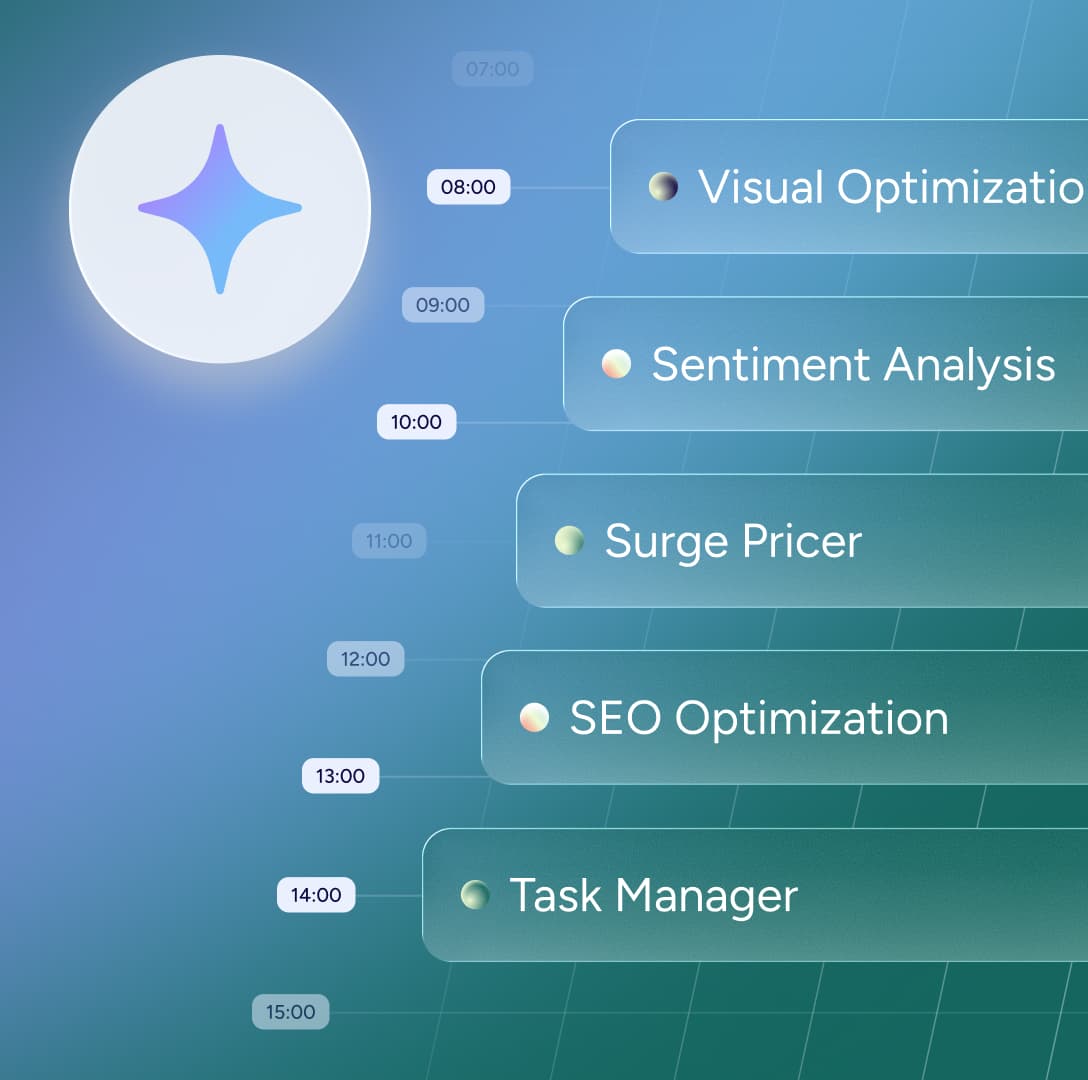
Stitch all of this together and the picture becomes clear. Not individual AI features improving one part of your workflow. A coordinated system of agents, each responsible for a business outcome, each sharing context with every other, each drawing from a dataset built on 13 years of real STR operations and over 500,000 active listings.
| Domain | 2026 (now) | 2027 | 2028 |
|---|---|---|---|
| Guest communication | Autonomous replies for routine messages; sentiment-based escalation | Proactive messaging based on reservation lifecycle; multi-agent coordination within conversations | Fully contextual conversations that price, schedule, and resolve in a single pass |
| Revenue | Real-time rate adjustments based on demand signals | Pricing informed by review sentiment, communication patterns, and competitive movement | Continuous autonomous revenue optimization across nightly rates, upsells, and extensions |
| Operations | AI task creation from guest messages | Coordinated scheduling based on team availability and property proximity | Predictive task creation based on historical patterns |
| Finance | Daily automated reconciliation; reservation-level fraud detection | Continuous owner statement updates; behavioral fraud prediction | Fully autonomous financial operations with exception-only human review |
The always-running business isn’t about removing your team. It’s about changing what your team does. The repetitive work — inbox triage, rate monitoring, task creation, payment matching — runs in the background. Your people focus on owner relationships, portfolio strategy, guest experience, and the judgment calls that require human expertise.
Same team. More execution. Compounding data advantage. That’s the trajectory.
How do you position your business for what’s coming?
You don’t need to have everything figured out before you move. Start with the highest-volume pain point — for most operators, that’s guest communication — and let the data accumulate. The AI gets smarter with every interaction, every booking, every resolved complaint.
But the strategic decision isn’t which feature to turn on first. It’s whether your data lives in a connected system or a fragmented stack. Fragmented tools produce fragmented data. Fragmented data trains mediocre AI. And mediocre AI at scale is worse than no AI at all.
The operators who build on a connected platform now — where communication, pricing, operations, and finance share the same data layer — are building a compounding advantage that widens every month. The data gets richer. The agents get smarter. The operation runs tighter.
Three years from now, the gap between an agentic operation and a manually managed one won’t be about efficiency. It’ll be about what’s possible. The always-running business will handle portfolios at a scale that manual operations simply cannot match, regardless of team size or budget.
The question isn’t whether this shift is coming. It’s whether your data is ready for it.