Villas and apartments represent the two distinct gears of the UK short-term rental (STR) market. One is a high-margin, luxury-focused play. The other is a high-volume, efficiency-driven machine. For small hosts, the decision depends on daily operational realities. Purchase price matters, but the workload defines the business.
TL;DR
- Holiday villas command high nightly rates but depend on seasonal peaks — expect to earn most of your annual revenue in a narrow window.
- City apartments generate lower per-night revenue but deliver steadier year-round occupancy from business travelers and tourists.
- Villas require specialist vendor networks (pool techs, gardeners) that increase remote management complexity.
- Apartments demand high turnover efficiency and strict noise management to protect building relationships.
- The FHL tax regime offered significant advantages, but was abolished in April 2025 — update your financial projections accordingly.
- Automation bridges the operational gap for both models, but villas still require more hands-on management than apartments.
The UK short-term rental landscape in 2026
The UK market is split. Regional staycation spots like Cornwall, the Cotswolds, and the Scottish Highlands see high demand for destination properties, while urban hubs like Manchester, Birmingham, and London rely on international tourism and business travel.
Villas and large detached homes benefit from domestic travel trends. Groups and families prioritize space, allowing villa hosts to charge higher rates during school holidays and long weekends. Apartments in city centers operate on a high-turnover model. While tourism drives bookings, the return of contractor stays and corporate travelers provides mid-week stability that regional villas lack.
Villa profitability: high margin, high complexity
Villas are high-value assets. In the UK, a luxury villa can command several times the nightly rate of a city apartment. These margins require significant work.
Maximize peak summer and half-term revenue
Villas depend on the UK holiday calendar. Depending on location, you may earn the majority of your annual revenue in a narrow peak window — some villa operators report earning 60–70% of yearly income during school holidays and summer alone. Profitability depends on tiered pricing. Charge premium rates for the main house while offering lower out-of-season rates for couples using only a portion of the property.
Manage maintenance and remote overhead
The biggest threat to profitability is the cost of remote management. If a pool heater fails and the technician is an hour away, the refund could eliminate a week of profit. Managing a villa requires a network of local vendors like gardeners and hot tub technicians. These specialists often lack digital tools.
For hosts managing villas with outbuildings, annexes, or multiple tiers of guest access, using Guesty’s™ Multi-unit management feature allows you to manage these as separate listings under one parent property. This lets you market a 4-bed villa and a 2-bed annex simultaneously without double-booking the core site.
Apartment profitability: high volume, low friction
Apartments rely on steady volume. Focus on a repeatable, scalable model where turnover is fast and efficient.
Maintain high occupancy for the algorithm
To keep an apartment profitable, you need high occupancy. This requires frequent bookings, instant responses, and a constant stream of 5-star reviews. The volume of guest communication is high. A three-unit apartment portfolio may have ten times the check-ins of a single large villa.
Prevent noise complaints and building friction
Boost your short term rentals today
Apartment profitability depends on building management and neighbors. Noise complaints cause vacancy. Successful hosts use tech like noise sensors and automated guest vetting to protect their status in the building.
When managing multiple similar units across a city, Guesty’s Multi-unit management is essential. It groups similar apartments together. You can manage availability and pricing across the entire pool of units rather than tweaking each one individually. This reduces manual admin time.
Operational comparison: what it costs to run
| Factor | UK holiday villa | Urban apartment |
|---|---|---|
| Initial capex | High (landscaping, high-end furniture) | Moderate (standardized, functional) |
| Maintenance frequency | Monthly (gardens, pools, exterior) | Ad-hoc (internal wear and tear) |
| Cleaning complexity | High (5-8 hours per turnover) | Low (1.5-3 hours per turnover) |
| Marketing seasonality | Extreme (summer/Christmas peaks) | Low (steady year-round demand) |
| Vendor management | Specialist (arborists, pool pros) | Generalist (handymen, electricians) |
The “FHL” factor: navigating UK tax for maximum profit
The UK abolished the Furnished Holiday Let (FHL) tax regime in April 2025. Previously, FHL status allowed hosts to deduct full mortgage interest and access Capital Gains Tax relief — advantages no longer available. Update your financial projections to reflect the higher tax burden, particularly for villas where mortgage costs are significant.
Technology and scalability: working smarter, not harder
The biggest risk for a small host is burnout. Automation prevents this.
Automate the guest welcome
Villas require a personal touch, but apartments thrive on automated service. Smart locks are essential for urban units to avoid key exchange bottlenecks. For villas, explaining how to use the heater or hot tub significantly reduces guest support calls.
Use dynamic pricing for city markets
Apartments favor automated pricing. In crowded cities, rates must change frequently to stay competitive. UK tax rules dictate net profitability. You must account for local events like the Goodwood Revival or the Edinburgh Fringe that automated tools may miss.
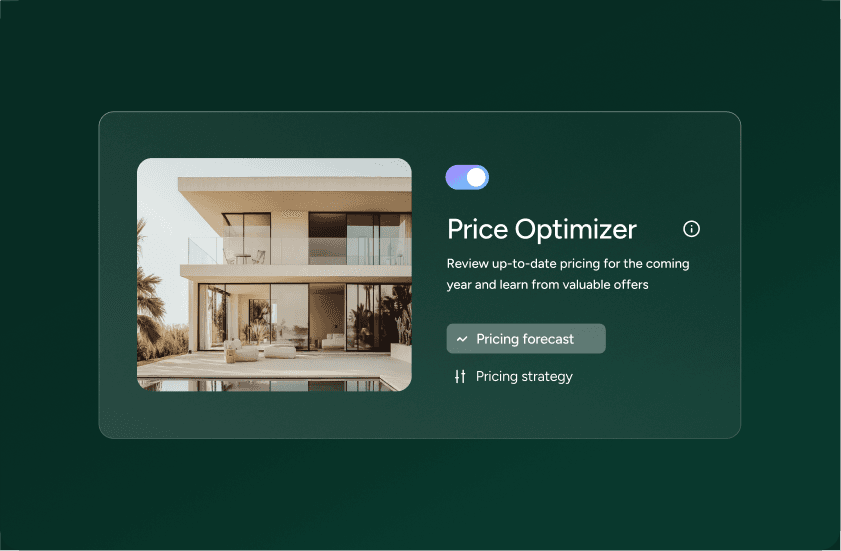
Using a tool like Guesty PriceOptimizer™ allows you to set rules like minimum stays and base rates while the system adjusts for local demand. This is effective for apartments where occupancy efficiency drives ROI.
Which property wins for small hosts?
The best choice depends on your goals and resources.
- Choose the villa if you want a high-value project with large individual payouts. This requires a reliable local network of tradespeople and the ability to manage seasonal cash flow.
- Choose the apartment if you want a repeatable business model that scales through automation.
Scale your UK rental operations
Guesty Lite™ (1–3 listings) provides essential automation for hosts starting with a single villa or apartment. Guesty Pro™ (4–499 listings) supports growing portfolios with multi-unit management, advanced reporting, and dynamic pricing. Guesty Enterprise™ (500+) delivers custom workflows and dedicated support for large-scale operations across multiple regions.
.