Regional tourism in Australia has changed. The growth of luxe-rural stays, driven by tiny houses on private land and boutique caravan park redevelopments, has turned hobbyist markets into serious asset classes. For small hosts, the challenge lies in moving from managing one property via spreadsheets to operating a profitable, multi-unit portfolio. Scaling in the Australian landscape requires navigating local regulations while implementing operational systems that keep remote sites functional without constant manual intervention.
TL;DR
- Australian tiny house and caravan park regulations are governed at the local government area (LGA) level — a strategy that works in Byron Shire may be prohibited in the Yarra Valley.
- Tiny houses on wheels are often classified as caravans, which bypasses building codes but may trigger stay-duration caps.
- Off-grid systems (solar, water, composting toilets) require clear guest instructions to prevent negative reviews — use QR-linked video guides.
- Diversify beyond Airbnb: list on “Unique Stays” categories, build a direct booking website, and own your guest data for repeat business.
- Automate guest communication, cleaning coordination, and dynamic pricing to manage remote sites without constant manual oversight.
- Guest screening and identity verification are essential for unstaffed rural properties where physical response isn’t immediately possible.
Navigate the Australian regulatory landscape for unique stays
The primary hurdle for Australian hosts is the patchwork nature of local regulations. Rules are governed by local government areas (LGAs). A tiny house strategy that works in the Byron Shire might be prohibited in the Yarra Valley.
Understand zoning and local government area (LGA) requirements
In Australia, the legal definition of your structure determines the path to approval. Many councils treat a tiny house on wheels (THOW) as a caravan. While this might bypass certain building codes (BCA), it often triggers limits on stay duration or unit density per title. Identify if land is zoned as RU1 (primary production) or RU2 (rural landscape). These zones frequently allow for Environmental Facility or Small-scale Tourism permits. If managing an existing caravan park, scaling often involves a change of use application to replace powered sites with permanent or semi-permanent cabins.
Register with short-term rental accommodation (STRA) registries
New South Wales and Victoria have mandatory short-term rental accommodation (STRA) registries. NSW’s STRA rules cap non-hosted stays at 180 days (or 365 in some areas). Victoria’s rules differ. Verify current thresholds for both states at publication, as these have been in flux. Certain rural LGAs are exempt from these caps to encourage tourism. Verify the specific property status on the state planning portal. Failure to register can result in fines and removal from booking platforms.
Design for the unique guest: amenities and off-grid balance
Modern Australian travelers expect functional disconnection. Scaling requires delivering a professional guest experience while managing the logistics of off-grid systems.
Select essential amenities for tiny homes and park cabins
Every amenity must serve a purpose. Starlink internet is now a requirement for remote workers staying in regional areas. Focus on high-impact features like fire pits with pre-chopped wood, premium linens, and outdoor baths — these features drive social media visibility and organic bookings.
Manage off-grid systems without guest friction
System failures lead to negative reviews. Implement clear systems to prevent guest frustration and reduce support requests.
| System | Operational strategy |
|---|---|
| Water & waste | Use visual gauges for tank levels and provide a clear guide for composting toilets |
| Solar & power | Label high-draw appliances that trip inverters and provide power usage limits |
| Instructions | Use QR codes linked to video guides for hot water systems and solar resets |
Implement marketing strategies to increase visibility and bookings
A diversified distribution strategy protects margins and ensures occupancy during the off-season. Do not rely on a single listing platform.
Leverage the “Unique Stays” category
Boost your short term rentals today
Airbnb and Booking.com feature specific categories for tiny homes and parks. To rank well, the lead image must show the structure within the landscape. Professional photography of the property during optimal lighting is a high-return investment for new listings.
Build a brand for your park or tiny house site
Relying only on online travel agencies (OTAs) increases commission costs. As you scale, drive repeat bookings through direct channels to improve profit margins and own your guest data.
Comparison of booking channels
| Feature | Airbnb / Vrbo | Direct booking website |
|---|---|---|
| Reach | Global, massive audience | Limited to your marketing efforts |
| Fees | 3% to 15% (varies by platform) | 0% to 3% (payment processing only) |
| Guest data | Restricted by platform | You own the email and phone data |
| Brand loyalty | Guests are platform customers | Guests are your brand customers |
| Guest screening | Limited to platform history | Full control over verification |
Streamline operations for the remote host
Manual management becomes impossible when growing a portfolio. For hosts in remote locations, automation manages the workload and ensures consistent service levels across all units.
Automate guest communication to save time
Repeat questions about access and facilities consume hours of manual labor. Use the Guesty Unified Inbox™ to centralize messages from Airbnb, Booking.com, and WhatsApp into one dashboard. Messaging automation handles check-in instructions and follow-ups. This keeps operations moving even when you are out of mobile range or in a different time zone.
Coordinate cleaning and maintenance across rural locations
Regional staffing is a common hurdle. Guesty Task Manager™ assigns turnovers to remote staff automatically. Cleaners use the mobile app to follow checklists, upload photos, and report maintenance issues like leaking rainwater tanks. This provides oversight without requiring a physical presence.
Protect your assets and ensure guest safety
Unstaffed sites require robust security to prevent damage or unauthorized gatherings. Protection begins with verified guest identification before access is granted.
Install security measures for unstaffed sites
Smart locks and external security cameras are standard for remote management. However, the best defense is proactive guest screening to mitigate risk before the stay begins.
Use guest screening and identity verification
Manual ID checks are inefficient. GuestVerify™ automates background checks and identity verification before releasing check-in codes. This security layer is essential for remote sites where immediate physical response is not possible.
Apply dynamic pricing for the Australian travel season
Demand varies significantly by region and month. A tiny house in the Snowy Mountains peaks in winter, while a caravan park on the Sunshine Coast peaks in summer.
Use seasonal vs. event-based pricing strategies
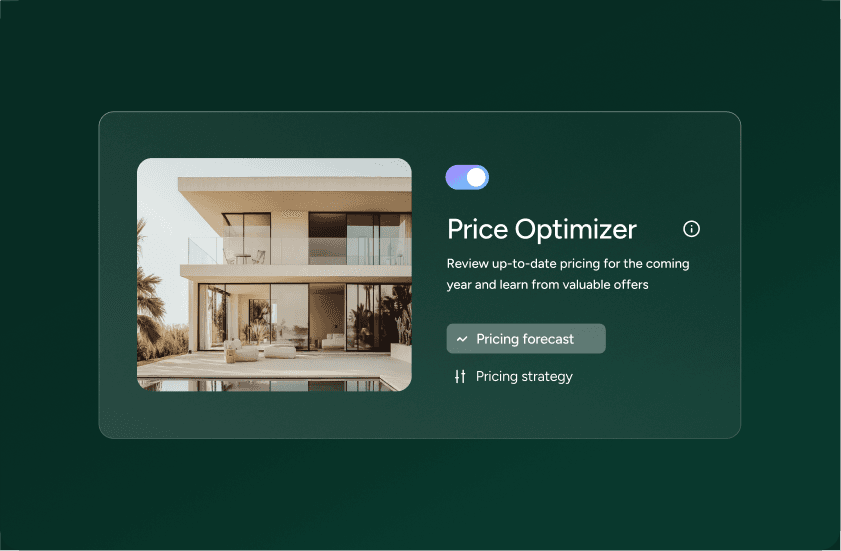
Static rates lose revenue. Charge premiums for long weekends like Easter and school holidays. Use mid-week discounts to maintain occupancy. Guesty PriceOptimizer™ automates rate adjustments based on local demand and competitor data. It updates prices to fill gaps or capture surges during festivals, maximizing revenue per available night.
Scale your Australian unique stays portfolio
Guesty Lite™ (1–3 listings) provides essential automation for hosts managing their first tiny house or park cabin. Guesty Pro™ (4–499 listings) supports growing portfolios with API-integrated channel management, automated pricing, and task coordination across remote sites. Guesty Enterprise™ (500+) delivers custom workflows and dedicated support for operators managing multiple parks or regional portfolios.