For small investment property owners in the US, the choice was once simple. You would find a reliable tenant, sign a 12-month lease, and collect a monthly check. The growth of short-term rentals (STRs) on platforms like Airbnb has changed the financial modeling for residential real estate.
The choice between Airbnb and traditional renting depends on both revenue goals and lifestyle preferences. An Airbnb can double your gross revenue, but it converts a passive investment into a high-intensity hospitality business.
TL;DR
- Airbnb gross revenue can significantly exceed long-term rental income, but higher operating costs (cleaning, utilities, furnishing, platform fees) narrow the net margin.
- Long-term rentals offer predictable cash flow with lower effort — often the better net outcome in heavily regulated or high-tax markets.
- Mid-term rentals (30+ days) offer a hybrid path: higher margins than traditional leases, lower turnover than Airbnb, and fewer regulatory hurdles in restrictive cities.
- Seasonal pivoting — running STR during peak months and MTR or LTR during slow seasons — protects against vacancy and demand swings.
- Automation closes the effort gap, making STR management closer to the passive experience of a long-term lease.
- Check local zoning, permitting, and occupancy tax requirements before listing — violations risk fines and permanent platform bans.
Understand the core differences for small hosts
The choice involves a trade-off between yield and effort. Traditional long-term rentals (LTR) use a “set it and forget it” model. You manage one tenant, one contract, and one recurring payment. Short-term rentals require a high-velocity operation. You might host 15 different groups in a single month, and each group expects a hotel-standard experience.
Operating an STR involves more than renting a room. It requires managing professional cleaning schedules, handling 24/7 guest communication, and maintaining high review scores. This complexity generates the “Airbnb Premium.” You gain the ability to charge nightly rates that exceed what a monthly lease provides.
Analyze profitability: gross revenue vs. net profit
Gross income often masks the true profitability of an investment. An Airbnb in a high-demand US market might bring in $5,000 a month compared to $2,500 for a long-term lease, but the net profit margin is often thinner. These numbers vary significantly by market, property type, and seasonality — run the math for your specific location before committing to a strategy.
To keep an Airbnb profitable, you must cover utility and Wi-Fi costs, as the host pays these expenses. Turnover costs include professional cleaning and laundry after every stay. You also pay for consumables like coffee and toiletries. Platform fees on Airbnb typically take 3% of your revenue (fees vary by platform if you list elsewhere), and your initial investment is higher because you must fully furnish the home.
The LTR model provides predictable cash flow. You face zero vacancy for a year or more and avoid fluctuating seasonal rates. Tenants typically pay for their own utilities. In markets with high taxes or strict STR regulations, the low-overhead stability of a long-term lease often results in better net cash flow.
Evaluate the management reality
Many small hosts seek passive income, but an Airbnb often becomes a significant time commitment. Operators face “guest communication fatigue” from answering repetitive questions about Wi-Fi or check-in instructions at odd hours. If a pipe bursts, you must immediately find the guest a new location and handle the accounting for cancelled bookings.
Boost your short term rentals today
| Task | Short-term rental (STR) | Long-term rental (LTR) |
|---|---|---|
| Communication | Daily (inquiries, check-ins, reviews) | Monthly (rent, repairs) |
| Maintenance | 4–10 times per month | Once every 12–24 months |
| Accounting | Complex (taxes, platform fees, cleaning) | Simple (one payment, few expenses) |
| Pricing | Active (daily changes based on demand) | Fixed (one annual adjustment) |
| Regulatory burden | High (permits, occupancy taxes) | Moderate (local landlord laws) |
Navigate the U.S. regulatory and legal landscape
The regulatory environment for hosts varies by city. Columbus and Savannah provide clear pathways for STRs. In contrast, New York City and San Francisco have implemented restrictions that effectively ban short-term stays for non-resident hosts.
Your first move must be a zoning check. Violating local ordinances results in fines and can lead to permanent platform bans. Many US cities also require specific rental agreements for every stay, which increases the administrative burden if you manage the property manually.
Consider the mid-term rental hybrid strategy
If a 12-month lease is too rigid and a 3-night stay is too exhausting, the mid-term rental (MTR) is a viable alternative. Focusing on stays of 30 days or more targets traveling nurses, digital nomads, and corporate relocations.
MTRs bypass many strict STR regulations in major cities. This approach offers higher margins than traditional renting with significantly lower turnover than Airbnb. It keeps your calendar full while reducing manual labor.
Transition your strategy between models
Successful investors maintain flexibility by pivoting based on market shifts. You can use a seasonal pivot by running an Airbnb during peak tourism months and switching to a 3-month mid-term lease during the winter. If a city introduces a new occupancy tax, having the data ready to pivot back to a long-term lease protects your investment from negative cash flow.
Capture higher revenue through automation
Many small hosts struggle because they attempt to run a 24/7 business with a 9-to-5 mindset. You can make Airbnb management feel as passive as a long-term lease by using professional automation tools.
By implementing Guesty Lite™ (1-3 listings), you can centralize all operations. A unified inbox allows you to manage all guest communication in one place rather than jumping between apps. Automated messaging handles routine check-in and check-out instructions. This automation captures high revenue without the burnout of manual management.
Scale your portfolio without high overhead
Growing from one listing to ten requires moving beyond spreadsheets. Manual pricing and tracking lead to errors in cleaning fees or tourist tax calculations. These mistakes make scaling difficult and erode the margins that justify the effort.
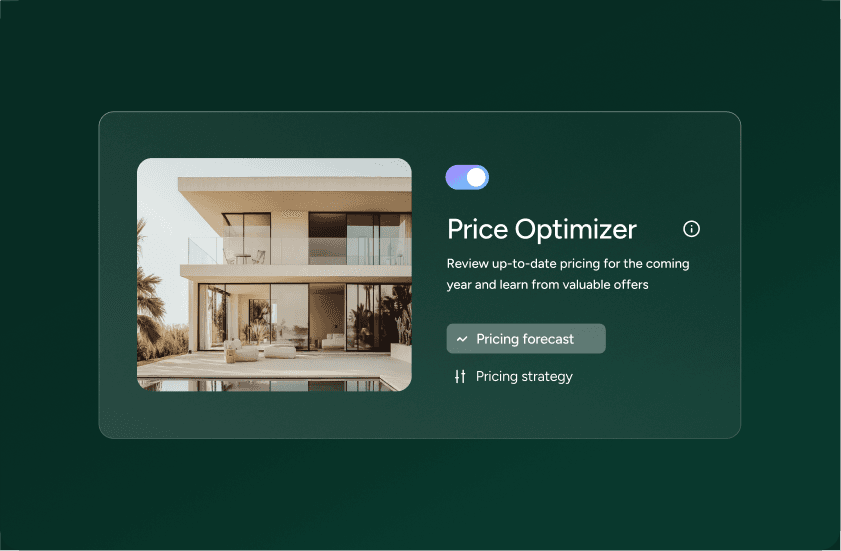
Using Guesty PriceOptimizer™ allows you to replace manual market research with dynamic pricing that adjusts to local demand. Professional-grade accounting and owner portals enable you to manage a growing portfolio with the same effort required for a single unit. Scaling is about using an efficient tech stack to improve your margins.
As your portfolio grows beyond three listings, Guesty Pro™ (4–500 listings) adds dynamic pricing, trust accounting, and owner reporting to support professional-scale operations.