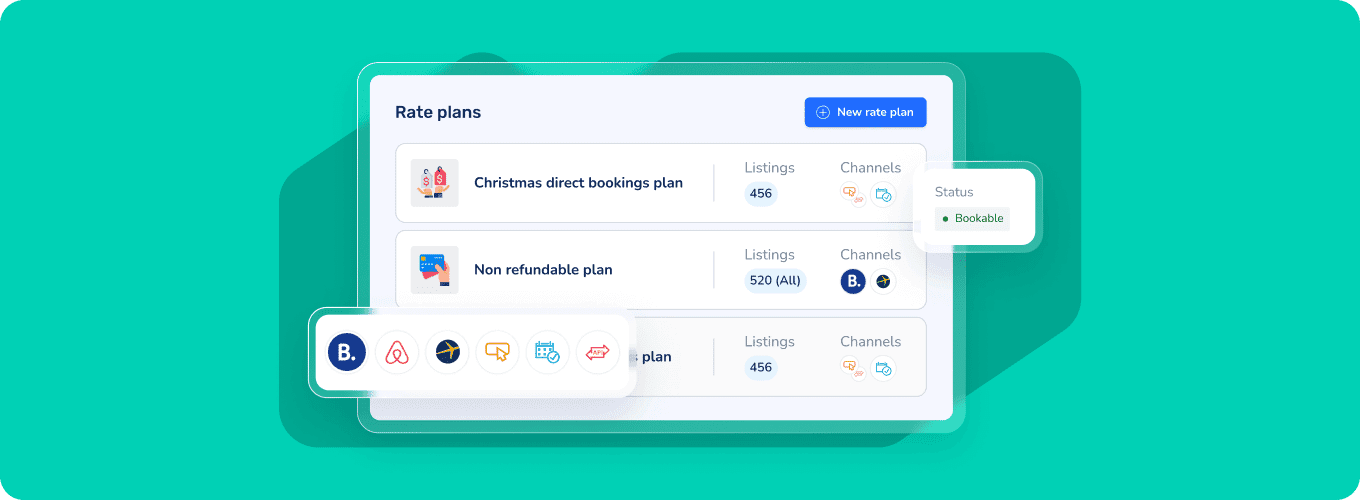
TL;DR: Revenue management refers to method of pricing your listings to maximize profit. Build your strategy in layers: start with a strong base price, add dynamic pricing or manual rate strategies, introduce rate plans and upsells, then top it off with targeted promotions. The more layers you add, the higher your revenue ceiling.
At the end of the day, what matters most for your hospitality business is revenue. The ability to set the right price at the right time vastly improves bookings and your bottom line.
According to short-term rental (STR) data experts Transparent, revenue management is “the method of using analytics to examine availability and price, and predict guests’ behavior with the aim of maximizing revenue.”
In simpler terms, revenue management is how you make the most money from your listings. You need to find that Goldilocks Zone of pricing. High enough to generate solid revenue, low enough to keep bookings flowing. It’s the art of getting your pricing just right.
When done well, a revenue management strategy transforms your business:
- Generate more revenue per listing
- Minimize cancellation and fraud risk
- Save hours by automating manual pricing work
- Factor in demand shifts, market trends, and local events
How does a revenue strategy work?
To build the best revenue management strategy for your business, think of it as a pyramid. Each layer builds on the previous one, adding another dimension to your approach.
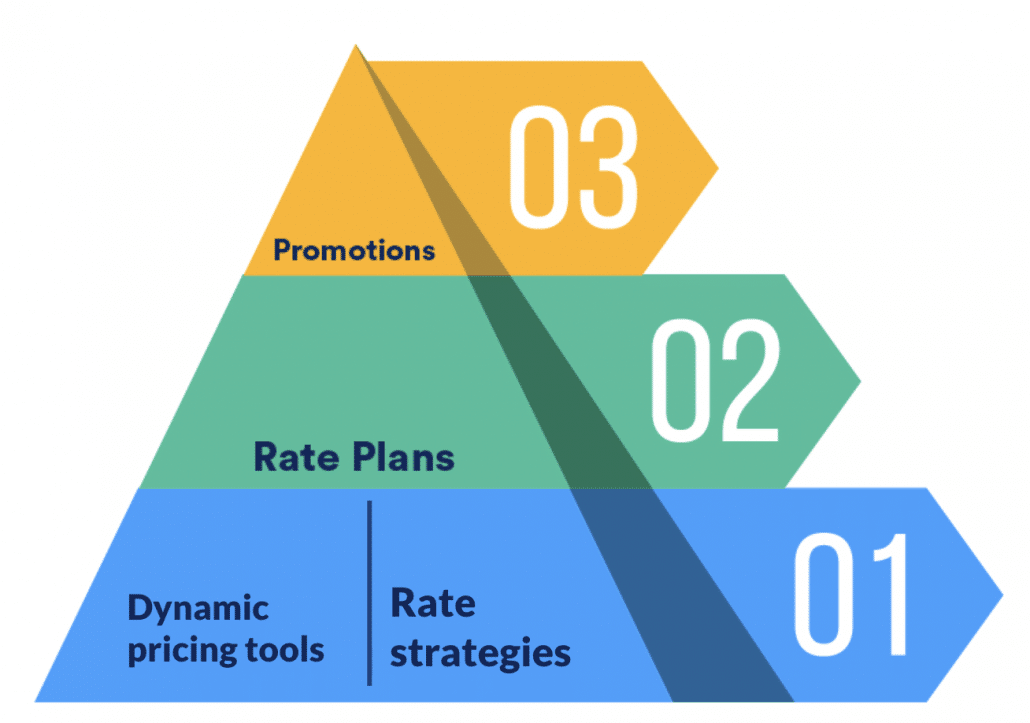
The more layers you add, the higher your potential revenue. But each layer also requires deeper knowledge and more effort to execute.
Let’s break down each level.
What should your base price be?
The foundation of the pyramid is your base price. The default ideal rate for a single night before any market adjustments. Essentially, it answers: “What is this listing worth?”

This depends mostly on fixed factors:
- Number of rooms (bedrooms, bathrooms, living spaces)
- Proximity to a city center or public transit
- Outdoor spaces like gardens, balconies, or patios
- Overall property condition and style
Fixed factors are, by definition, fixed. You can’t relocate your property. So what can you do to increase your base price beyond these constraints?
Amenities: the secret ingredient
Adding permanent amenities is one of the most effective ways to boost your base price and justify a higher nightly rate. While there’s an upfront cost, the premium you can charge often pays for itself within months.
Based on research from Beyond, hot tubs and swimming pools deliver the biggest impact. Vacation rentals with these amenities can charge 20–25% more than similar listings without them.

What’s the difference between dynamic pricing and rate strategies?
The first layer above your foundation offers two paths: let machine learning handle it with dynamic pricing, or manage it manually with rate strategies. Both have their place. It’s important to explore each before deciding.
Dynamic pricing
Dynamic pricing tools provide daily rate updates based on supply and demand shifts in your market. The premise is simple: market demand is highly dynamic, and no two days are the same.
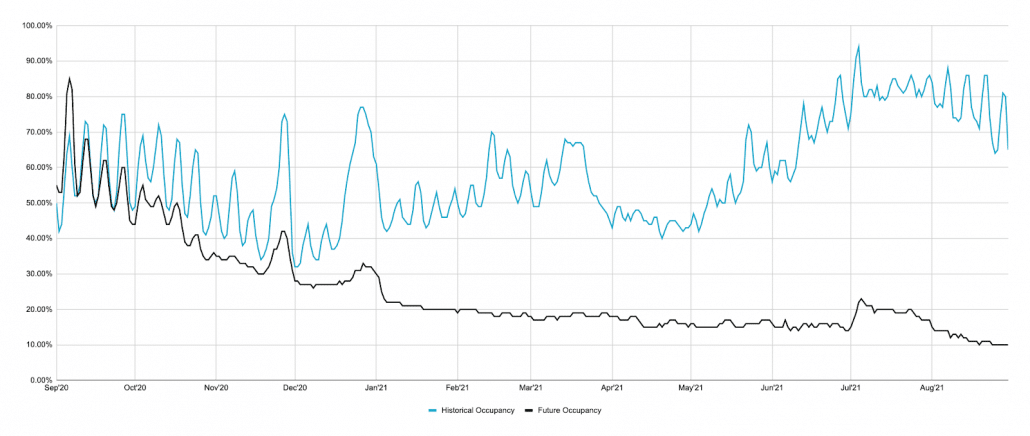
Daily demand fluctuates based on:
- Days of the week
- Seasonality patterns
- Local and hyperlocal events
- Market-wide trends
- Competitor pricing
A dynamic pricing tool like Guesty PriceOptimizerTM processes all this market data and delivers an optimized price for your listing, 365 days a year.
Why property managers choose dynamic pricing:
- Save time and stress: Calculating a nightly rate that accounts for every demand factor is a headache. Dynamic pricing handles it automatically.
- Maximize revenue: Pricing stays high enough to capture revenue but low enough to convert bookings.
- Retain control: You receive recommendations, not mandates. Fine-tune specific dates to meet your goals and set minimum/maximum rate limits to keep pricing within your range.
For hosts managing just a few properties, Guesty Lite includes access to rate strategies and connects with dynamic pricing partners through the Guesty Marketplace, giving you professional-grade pricing tools without the complexity of enterprise software.
Boost your short term rentals today
Rate strategies
The alternative is setting nightly rates manually. This approach translates your pricing strategy into your property management software (PMS) through a set of custom rules.
For example, one rule might increase nightly rates by 20% on weekends compared to weekdays. These rules can account for the same factors as dynamic pricing tools, but require your expertise to configure correctly.

Common factors to build rules around:
- Seasonality
- Competitor pricing
- Days of the week
- Booking lead time
- Local events and holidays
- Sport events and high-profile concerts
Why some property managers prefer rate strategies:
Rate strategies can be set up directly within one’s property management system (PMS) at no additional cost, and allow managers to capitalize on deep market expertise that may outperform algorithmic recommendations.
How can rate plans increase your bookings?
The second layer of the pyramid is rate plans. These increase bookings by offering guests different options (and pricing tiers) for the same listing. It’s also a prime opportunity for upsells.

Rate plan options to consider:
- Flexible cancellation policies: Travelers value flexibility more than ever. Offering flexible cancellation at a small premium is an easy way to add revenue.
- Extra beds: Families traveling with multiple kids often want an extra bed in one of the rooms and will pay for the convenience.
- Meals: Depending on your property type, including breakfast or other meals can justify a higher rate.
- Amenity rentals: Some amenities work better as add-ons. Bike or electric scooter rentals, kayaks, or paddle boards for waterfront properties. These turn your listing into an experience, not just a place to sleep.
The growing industry narrative that “the property is the experience” means memorable stays lead to direct bookings and repeat guests.
When should you use discounts, promotions, and coupons?
Layer three is the finishing touch on your revenue management pyramid. With the fundamentals in place, it’s time to target potential guests strategically.
Discounts, promotions, and coupons are marketing tools. Use them to fill lower-performing properties or drive bookings during slow seasons.
With your property management platform, create coupons for both OTA and direct booking channels. Showcase short-term promotions across all your channels, and set up automatic discounts based on length of stay.

Ideas for effective promotions:
- Early bird discounts: Reward guests who book well in advance.
- Last-minute deals: Fill gaps in your calendar with time-sensitive offers.
- Long-stay discounts: Lock in revenue during slower seasons and appeal to digital nomads combining work and travel.
Final thoughts
A solid revenue management strategy is essential to running a successful STR business. Each layer of the pyramid builds on the last, moving you from baseline pricing to sophisticated revenue optimization.
Start with your base price. Add dynamic pricing or rate strategies. Layer in rate plans and upsells. Top it off with targeted promotions. The more layers you build, the more revenue you capture.
What is revenue management in short-term rentals?
Revenue management is the practice of using data and analytics to set optimal prices for your listings. The goal is to maximize revenue by finding the right balance. Rates high enough to capture value, low enough to maintain strong occupancy.
How much can amenities increase my nightly rate?
High-impact amenities like hot tubs and swimming pools can add 20–25% to your nightly rate compared to similar listings without them, according to data from Beyond.
Should I use dynamic pricing or set rates manually?
It depends on your operation. Dynamic pricing saves time and responds to market shifts automatically. This is ideal if you’re managing multiple properties or don’t have deep local market expertise. Manual rate strategies work well if you have strong market knowledge and prefer hands-on control, or if you’re working with a tight budget.
What are rate plans, and why should I use them?
Rate plans let you offer different pricing options for the same listing, like flexible cancellation policies or added amenities. They increase booking conversion by giving guests choices and create upsell opportunities that boost revenue per reservation.
How do I decide which promotions to run?
Match your promotions to your business goals. Use last-minute deals to fill calendar gaps, early bird discounts to secure advance bookings, and long-stay discounts to lock in revenue during slow seasons. Event-specific promotions work well when local demand spikes.