
TL;DR: A strong listing description turns browsers into bookers. Lead with a punchy, benefit-driven headline (skip the all-caps). Get specific about your space – bed sizes, standout amenities, neighborhood highlights. Answer guest questions before they ask them. Target your ideal traveler with the right language. And update regularly: fresh descriptions boost search rankings and give guests a reason to book during every season.
Photos hook potential guests, but a great listing description will close the deal.
The right words tell travelers why your rental is the one worth booking. The good news is you don’t need to be a seasoned copywriter to get this right. Just follow these simple guidelines to create a description that turns interest into closed bookings.
1. How do you write a headline that stops the scroll?
“Open big” doesn’t mean all caps. In fact, uppercase headlines can tank your bookings because they read as unprofessional to most travelers.
Instead, open with intrigue. Attention spans hover around eight seconds. Your headline needs to earn the click in that window.
Most OTAs give you 50 characters. Use them strategically.
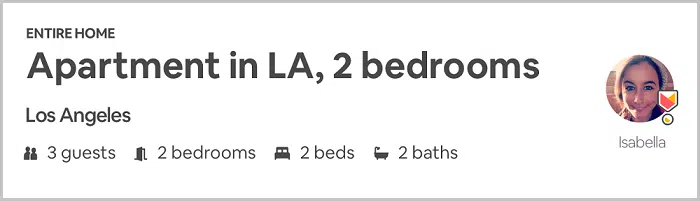
Weak headline:
Strong headline:
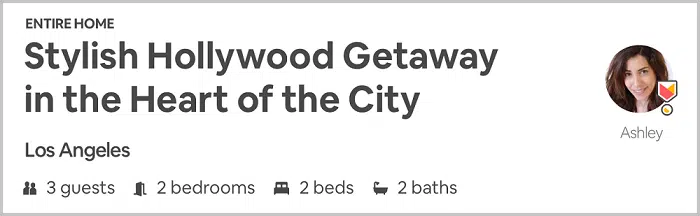
The weak version repeats what travelers already know. They filtered for Los Angeles. The strong version tells them something new: your place is central, has a vibe, an aesthetic. The effort you put into your headline reflects the effort you’ll put into their entire stay.
Quick checklist for your headline:
- Under the character limit
- Describes what makes your space distinct from every other nearby listing
- Provides alluring details and visual imagery that capture the imagination
2. What details should your listing description include?
Guests researching a trip don’t like surprises. Your description should fill in what the photos can’t communicate, but more importantly, it should clearly set expectations to avoid bad reviews after the stay.
Cover the essentials:
- Room-by-room breakdown with standout features
- Bed sizes (twin, queen, king)
- Number of bedrooms, bathrooms, and showers
- Architectural details like high ceilings or natural lighting
Don’t skip the small details that elevate a stay:
- Smart 4K TV
- Quality kitchenware for guests who like to cook
- That antique sofa that feels like a cloud
Specificity signals effort and professionalism. It tells potential guests you’ve thought about their experience, and that you’ll deliver on expectations.
3. How do you write a description guests actually want to read?
Dry, generic descriptions won’t hold a browser’s attention. You don’t need Pulitzer-level prose. You need clear, engaging sentences without errors.
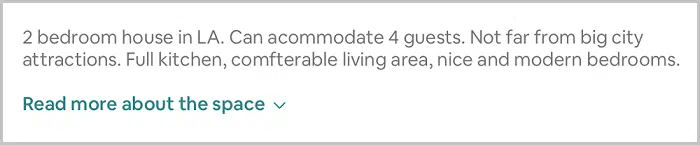
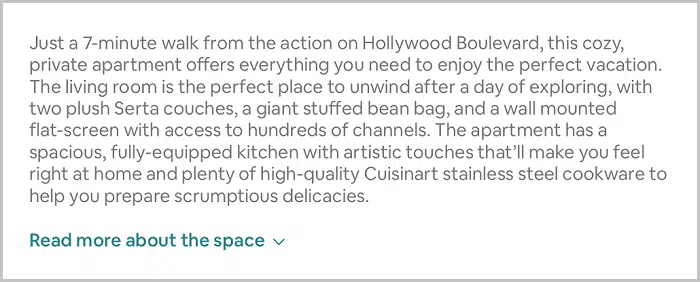
You can’t expect guests to get excited about your property if you barely sound interested in it yourself. Consider how the following details set the scene and paint a picture of their time in the space (a short walk to a well-known site, a “perfect vacation”, “plush couches”, “fully-equipped kitchen”, “feel right at home”.
Quick fixes
- Run spell check (it takes 30 seconds)
- Read your description aloud — does it flow or stumble?
- Replace tired adjectives with specific details
- Send it to a friend for a fresh set of eyes
The importance of spelling and grammar
Typos cost you. Listings with spelling errors or clunky grammar erode engagement and trust in your professionalism, and have been shown to lag behind the others by as much as 12% when it comes to turning browsers into guests.
4. What should you say about the neighborhood?
Your property is only part of the experience. Guests want to know what’s waiting outside your door.
Paint a picture:
- Is the area quiet or buzzing with energy?
- What’s within walking distance?
- Any local spots worth mentioning — a farmers market, a pub strip, a café with legendary eggplant parmesan?
Guests won’t spend their entire trip inside. Show them why your location makes their stay better.
5. How do you answer guest questions before they ask?
You’ve fielded enough inquiries to spot the patterns. Transportation questions. Dining recommendations. Pet policies. Occupancy limits.
Don’t make guests hunt for basics or — worse — reach out and wait for a reply. Build answers into your description:
- How public transit works and the distance to the nearest stop
- Nearby grocery stores and dining options
- Maximum occupancy
- Pet policy
- Key house rules
When guests can learn everything they need from a single read-through, they’re more likely to book on the spot.
6. How do you attract your ideal guest?
Different travelers respond to different cues. If you want to attract a specific type of guest, tailor your language accordingly.
| Guest type | What to highlight |
| Couples | Romantic setting, luxurious queen bed, spacious jacuzzi |
| Business travelers | High-speed wifi, workspace, proximity to commercial district |
| Families | Kid-friendly amenities, nearby parks, safety features |
| Groups or students | Entertainment options, nightlife access, flexible noise policy |
Consider adding these details to your headline, too. The right traveler will click when they see language that speaks directly to their trip.
7. Why should you update your listing description regularly?
Here’s the mistake most property managers make: writing a description once and forgetting it exists. In fact, a recent Guesty survey revealed that 58% of respondents do not regularly update their descriptions.
Static listings lose ground in two ways:
- Search visibility drops. OTA algorithms favor fresh content. Updating your listing signals active management and pushes you higher in results.
- Seasonal opportunities disappear. Your description should sell the experience available now — not six months ago.
Update your listing to reflect:
- Upcoming local events (concerts, festivals, sporting events)
- Seasonal attractions
- New amenities or recent upgrades
- Changed policies or offerings
If you’re managing multiple listings, keeping descriptions current across channels can feel like a second job. Guesty lets you set custom descriptions per channel — separate versions for Airbnb, Vrbo, and direct bookings — with translations in multiple languages, all managed from one dashboard.
For hosts with a handful of properties, Guesty Lite offers the same centralized control without the complexity of enterprise tools. Update once, push everywhere.
Frequently asked questions
Long enough to cover the essentials, short enough to hold attention. Most OTAs display a truncated preview, so front-load your most compelling details. Aim for 250–500 words for the full description.
Both. Use paragraphs for storytelling (vibe, neighborhood, what makes your place special) and bullet points for scannable details (amenities, house rules, logistics).
At minimum, once per season. More frequently if you’re in a market with major events, or whenever you add amenities or change policies.
Yes. OTA algorithms factor in listing freshness, keyword relevance, and completeness. A well-optimized, regularly updated description signals an active listing and can improve your position in search results.
You can, but channel-specific descriptions perform better. Airbnb, Vrbo, and Booking.com have different audiences and display formats. Tailoring your descriptions — and keeping them synced — pays off in conversions.

Guesty’s talented marketing team is comprised of passionate professionals who share insightful industry knowledge and shape brand narratives. By bringing a diverse blend of expertise to the table, we are the visionary architects behind the Guesty brand and innovative campaigns that help people understand our product.